


How to Use This Guide
You can actually read this boring guide when you’re not falling asleep. Or some of my other super boring articles. I try to write really bad so you can fall asleep on all of them!
But srrrsly though. 😛 Don’t get obsessed with ticking off all the boxes. I tried to organize it so you can see the most important things at a glance. There’s a table of contents on the left on Substack if you move the mouse over there.
Incredible Sleep Is Possible!
What is the best sleep you ever had? Did it feel like infinite perfect release and rejuvenation? Did you wake up feeling like a million bucks? I hope you did! That's what I always feel like when I sleep shirtless, on the grass, in the sun. (I wouldn't sleep on grass at night bc I don't wanna get wet from dew, and it is often too cold at night). More on that at the end.
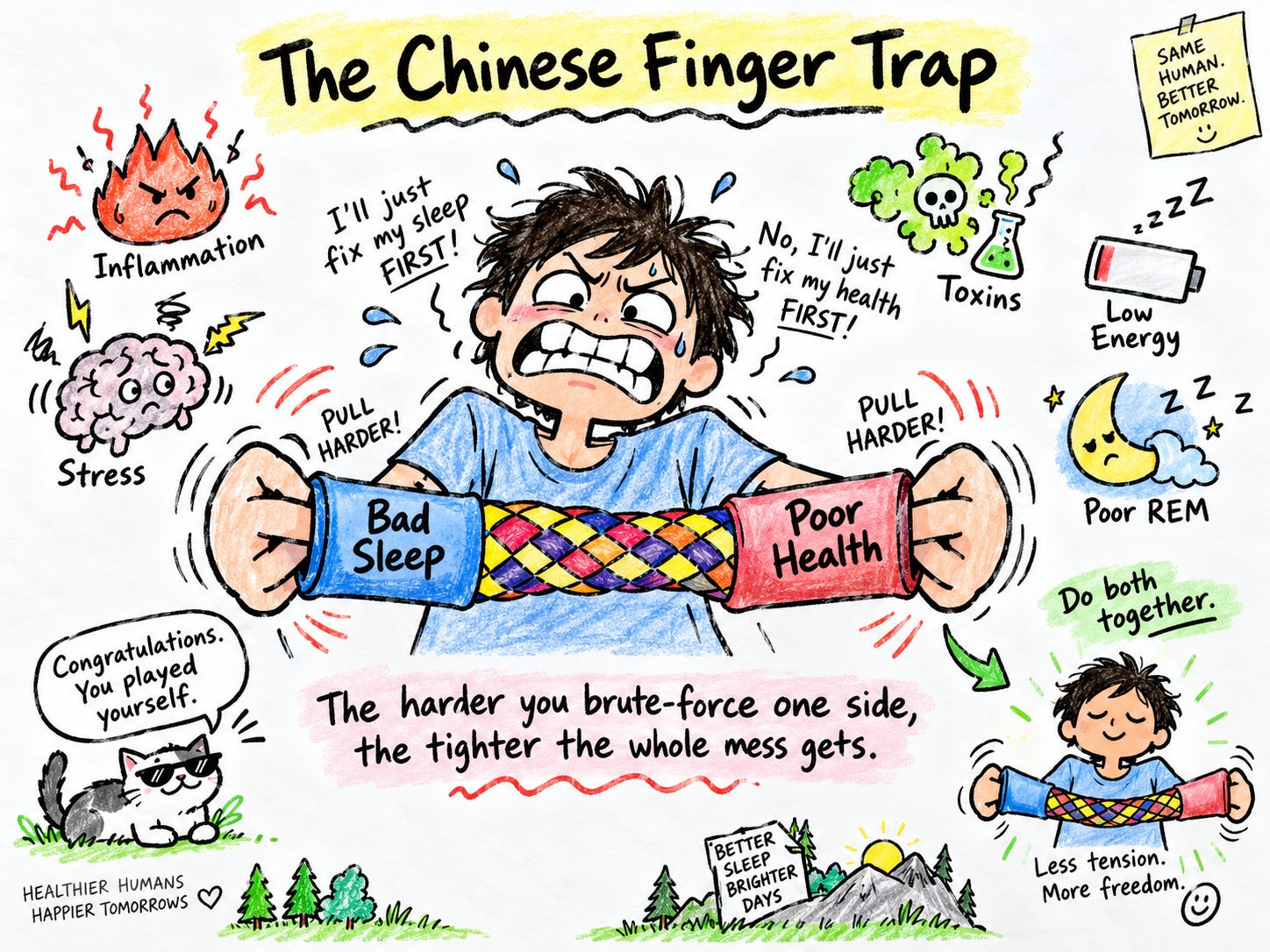
Deep sleep is the lynchpin to peak health. REM sleep is also important for processing emotions and problems you missed during the day. And while poor health can block deep sleep, deep sleep is also one of the most effective things to improve health, so both sides need to be addressed simultaneously like a Chinese Finger Trap.
Sleep can also be the key to the deepest spiritual experiences when targeted for that.
Unfortunately, sleep duration and quality have been declining worldwide for decades now, due to the toxins and stresses of modern life. So it sort of makes sense that getting back to nature would bring us back to the restorative natural sleep rhythms that our ancestors (even our parents) enjoyed more than even the most powerful people on Earth might today. But before you throw you phone in the dumpster and jump into a pile of leaves for good, let me make my app pitch:
Self-Hypnosis App & Audio Induction For Sleep
Self-hypnosis is a powerful tool that, when done correctly, can help sleep issues, among other things. I am (re-building) an app that integrates non-command spiritual communion self hypnosis with inner child reparenting, and has a sleep-mode feature which integrates much of the advice from this article with sleep-focused self-hypnosis induction, dreamtime hypnotic suggestions to encourage lucid dream meditation or whatever you want (can help with nightmares for example), and hypnagogic drift dialog to bring you into sleep in a different way.
And here’s the sleep hypnosis playlist that will put a hungry lioness to bed:
Self-Love Is Required
Your sleep will be sabotaged by infinite emotional problems if you don't love yourself. Loving kindness meditation is awesome, but inner child therapy is often where it starts.
Address Underlying Medical Problems

I’ll be getting into my sleep hygiene tips and cool hacks later. First, thing’s first, though, which is fixing underlying medical problems.
Detox the Body
A lot of medical issues are fairly “easily” treated. Easily in the sense that you can treat it yourself by finding the stressors and removing/replacing them in your life, rather than getting a surgery or other expensive and risky treatment. These are some sleep blockers which either are toxins themselves or might have toxic burdens beneath them: pain, inflammation, toxic metals, focal infections like root canals, alcohol & supplement/medication effects (even vitamin C at night although it’s not a toxin), reflux, blood-sugar swings, overheating, congestion, stress, allergies, chemical sensitivities, oh my, the list just keeps going. See my general detox guide here.
Check for Sleep Apnea
Apnea means interrupted breathing. You might feel like you breathe fine right now, but the real test is when you’re asleep. You can do your own sleep study with a simple microphone to record your breathing thru the night. If you hear snoring or pauses in breathing, that’s a huge clue. Also check the video and see if your mouth is open. Ask your partner if you snore (I’m sure they told you), or if single, use an app to tell you. Best one I could find is RISE.
If you do have apnea, confirm the apnea subtype and severity. Is your apnea due to airway obstruction, or breathing regulation, or a mix? What’s your lowest oxygen level (nadir)? Are you having actual breathing interruptions (AHI) or waking up because of more effort required to continue breathing (RERA)? How’s your body position? Does apnea get worse while dreaming?
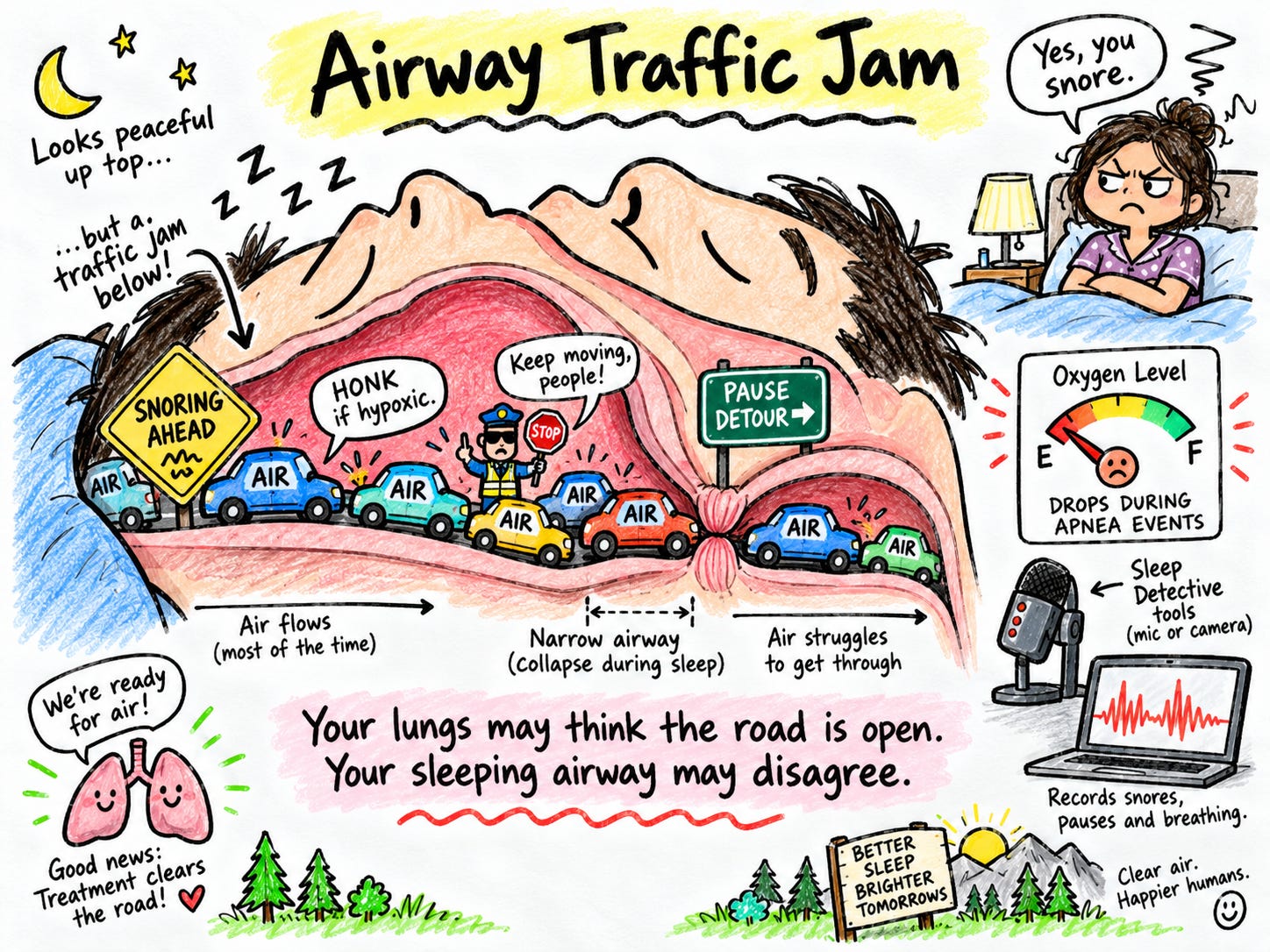
Open-mouth breathing can cause dry mouth, headaches, high BP, daytime fatigue, and pretty much every other health issue downstream.
The most common medical treatment for sleep apnea is CPAP (or other PAP) machine to force air in, but many people can’t tolerate the discomfort of that, and it’s also not a true cure.
Here are some more important things to consider first:
Lose weight if overweight: as explained in the above video, being overweight can put extra pressure on your body that leads to improper breathing. This is an obvious place to start if you have the weight to lose. I have a short guide on weight loss here.
Reduce alcohol/sedatives, improve exercise (especially Yin Yoga which has a myriad of other benefits), lose weight if that’s an issue, and consider myofunctional therapy.
Fix structural breathing blocks: While structural nasal blockage sometimes requires surgery, a much more interesting, safe and effective approach is Balloon Sinoplasty. If sinusitis or allergies are what narrows your sinus, you can do nasal irrigation with Quinton Medical Seawater. It has worked wonders for people I know. It also cures respiratory infections before they start!
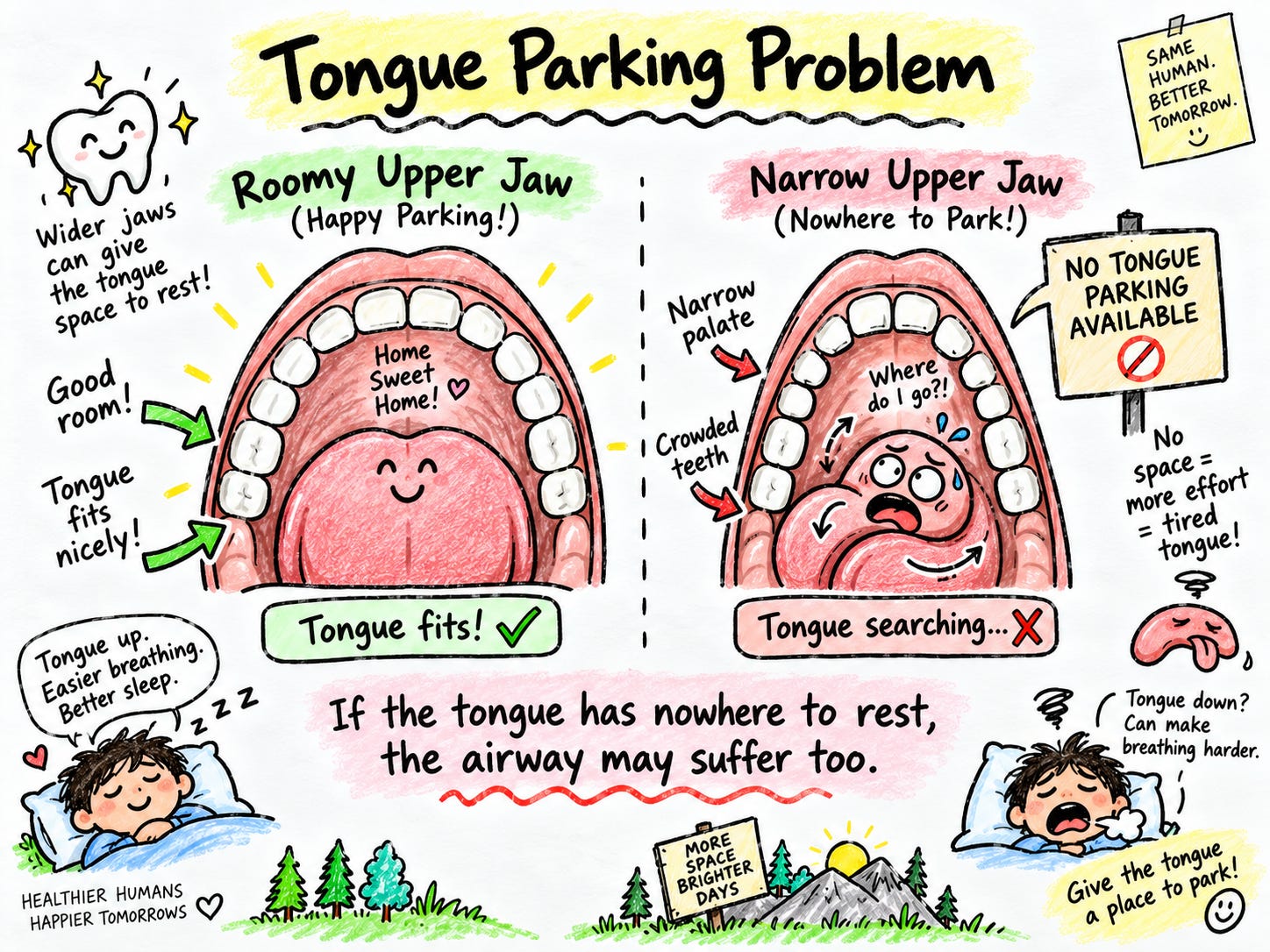
But you can often kill 2 birds with one stone if the underlying problem is a narrow maxilla. Does your tongue naturally rest on your upper palette? If it doesn’t fit, you need maxillary expansion. Here’s a video diving into the topic (which also explains custom oral appliances like Biobloc), but I did further deep research and found that there are indeed multiple people who have expanded their intermolar width substantially just by chewing harder foods like carrots, as well as mewing type exercises, although the hard foods seem more important to me.

Obstruction workarounds: It can take a while to fix obstruction. In the meantime, you can use the following methods to help:
Buteyko breathwork (longer exhales than inhales to improve oxygen utilization, see my breathwork guide) has been shown to reduce sleep apnea and improve sleep quality and health in general. Of course, effectiveness will vary depending on apnea cause, but the improved oxygen utilization itself is a boon regardless.
Positional therapy if your obstruction is worse in certain positions.
Some people promote mouth-taping as a hack, but be careful if you really have blocked sinuses, as you could suffocate.
Hypoglossal nerve stimulation can do the reminding instructions your brain shouldn’t have to:
Ask about restless legs syndrome if you get an urge to move your legs, especially when resting at night, and moving them around temporarily relieves it.
There’s one miracle sea algae that anecdotally works better for RLS better than any pharma treatment for most people, called Ecklonia cava (not related to the hepatotoxic sleep herb called Kava kava). But it lowers BP, so be cautious about dose and timing, especially if you take other meds that lower BP. Ecklonia cava also helps relaxation and sleep.
Ask about narcolepsy if you find yourself falling asleep during the day. This is extremely dangerous, especially while operating heavy machinery, bicycling, or even just walking around. There’s one approved medication for it that works pretty well, called Xyrem, but your doc will probably be hesitant to prescribe it because it’s actually GHB, an addictive street drug, but at the proper dosage it does seem highly effective when used medically. However, I wouldn’t jump straight to a highly-controlled Schedule I drug to fix this, because it almost always has some root health cause you can fix.
Get help sooner if you have drowsy driving like my buddy Pooyan did, sudden severe insomnia (days without sleep is super dangerous), violent dreams spilling into real life, dangerous sleep-walking, sleep-eating, sleep-sex, and yes even sleep-driving and sleep-raping as happens on Ambien/zolpidem and other common sleep drugs. If you have panic attacks at night, mania-like symptoms, suicidal thoughts, chest pain, fainting, severe depression, pregnancy/postpartum sleep collapse, or anything else just like, obviously urgent, consider seeing a specialist rather than tinkering with different reddit hacks.
Run a Two-Week Sleep Log
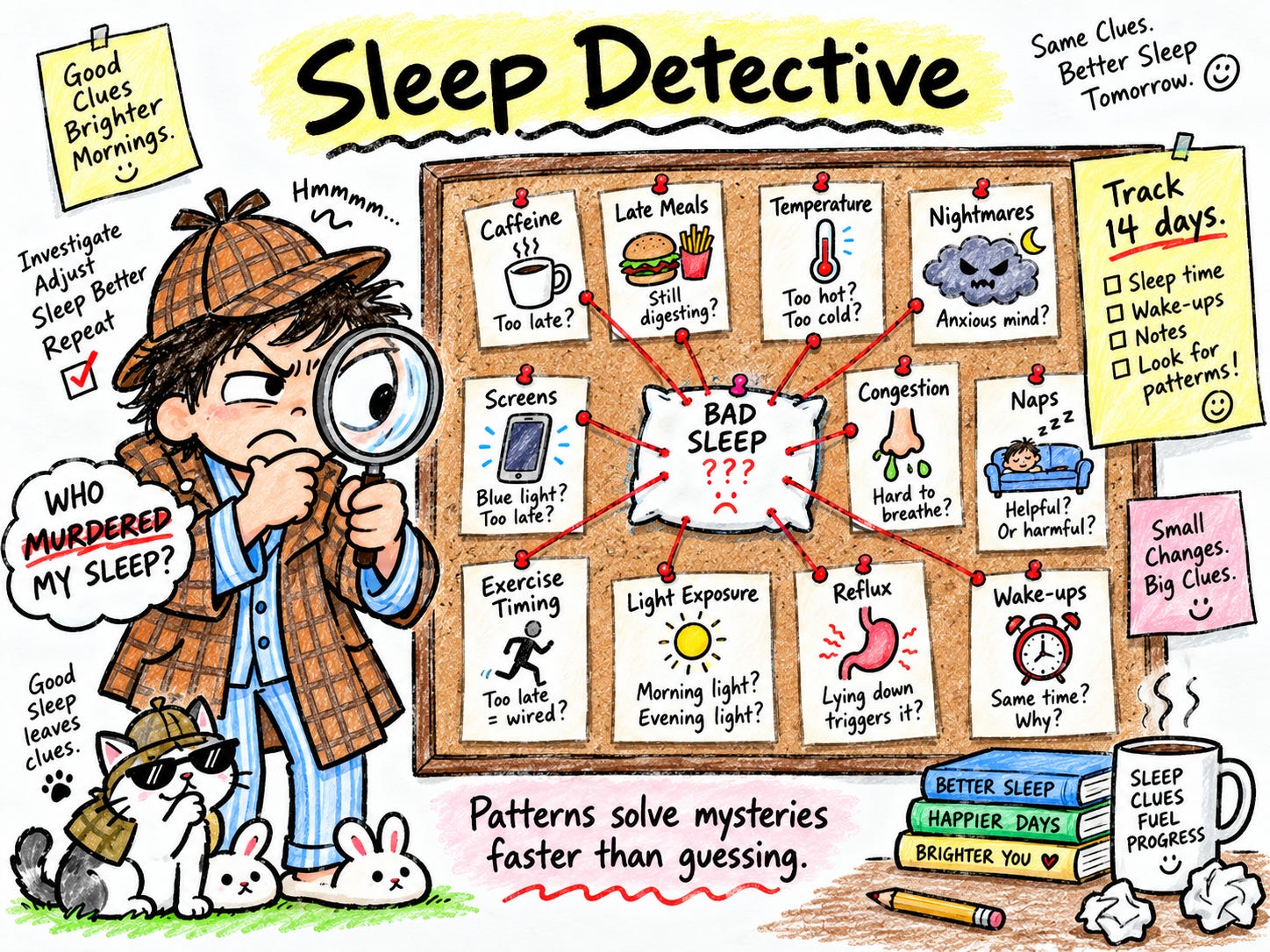
Before changing Everything, Everywhere, All At Once, track the basics for 14 days (you can even just read this list aloud to GPT with your observations quickly):
Bedtime (do you even have one?))
Lights-out time (please please don’t sleep with lights on)
Estimated time to fall asleep (video-record it)
Number and length of awakenings (video again)
What time you finally get up in the morning
Out-of-bed time during the night
Naps during day (try limiting to 15 min power naps)
Caffeine, nicotine, alcohol, cannabis, and other no-nos
Meds and supps
Exercise timing
Late meals, reflux, or late fluids. Certain foods especially, like anything containing vitamin C, or fermented foods like yogurt.
Morning light and evening light exposure (that red sun really helps)
Pain, anxiety, nightmares, hot flashes, congestion, urination, or restless legs
Daytime sleepiness, mood, focus, and driving safety (you’re only allowed to crash your car once per week)
You won’t measure stuff perfectly, but this way you might start seeing some important patterns jump out.
Don’t Chase Sleep-Stage Scores
Many influencers hype up wearable devices for measuring deep sleep and so forth. I do think they could be good for heart rate variability and that’s fairly simple to measure, but in my testing, and in the testing of actual sleep scientists (2026), they fell far short of the hype when it came to sleep results. The one thing that they can do is tell when you’re not moving, which they assume means sleeping. Don’t waste your money.
Fuel the Brain Properly
Many people are discovering that consuming more healthy fats than they normally would leads to much better sleep (and overall health). The Buddha also advised consuming animal fat for health when monastics were ill, even though they were not supposed to request meat when healthy. Healthy fats means virgin palm oil, extra virgin coconut oil, real verified extra virgin olive oil, avocado, organic pastured egg yolk, pastured A2/A2 organic butter/cream, and yes the actual animal fat itself as well. Stop consuming industrial, oxidized cooking oils, completely!
Naiman’s Sleep Insight Gems!
One of the most famous books on sleep is “Healing the Night,” by Rubin Naiman. Here are the top gems from that book:
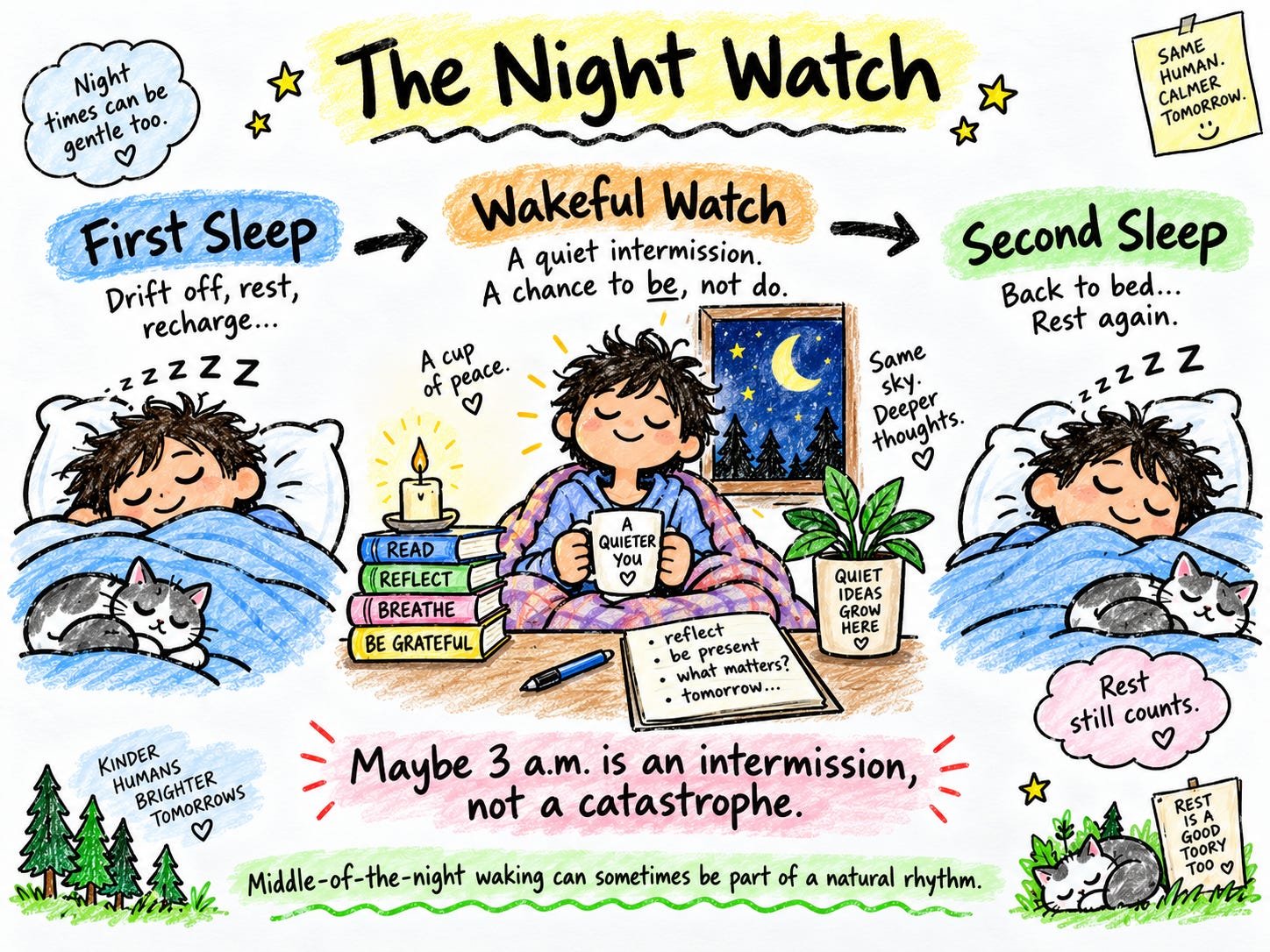
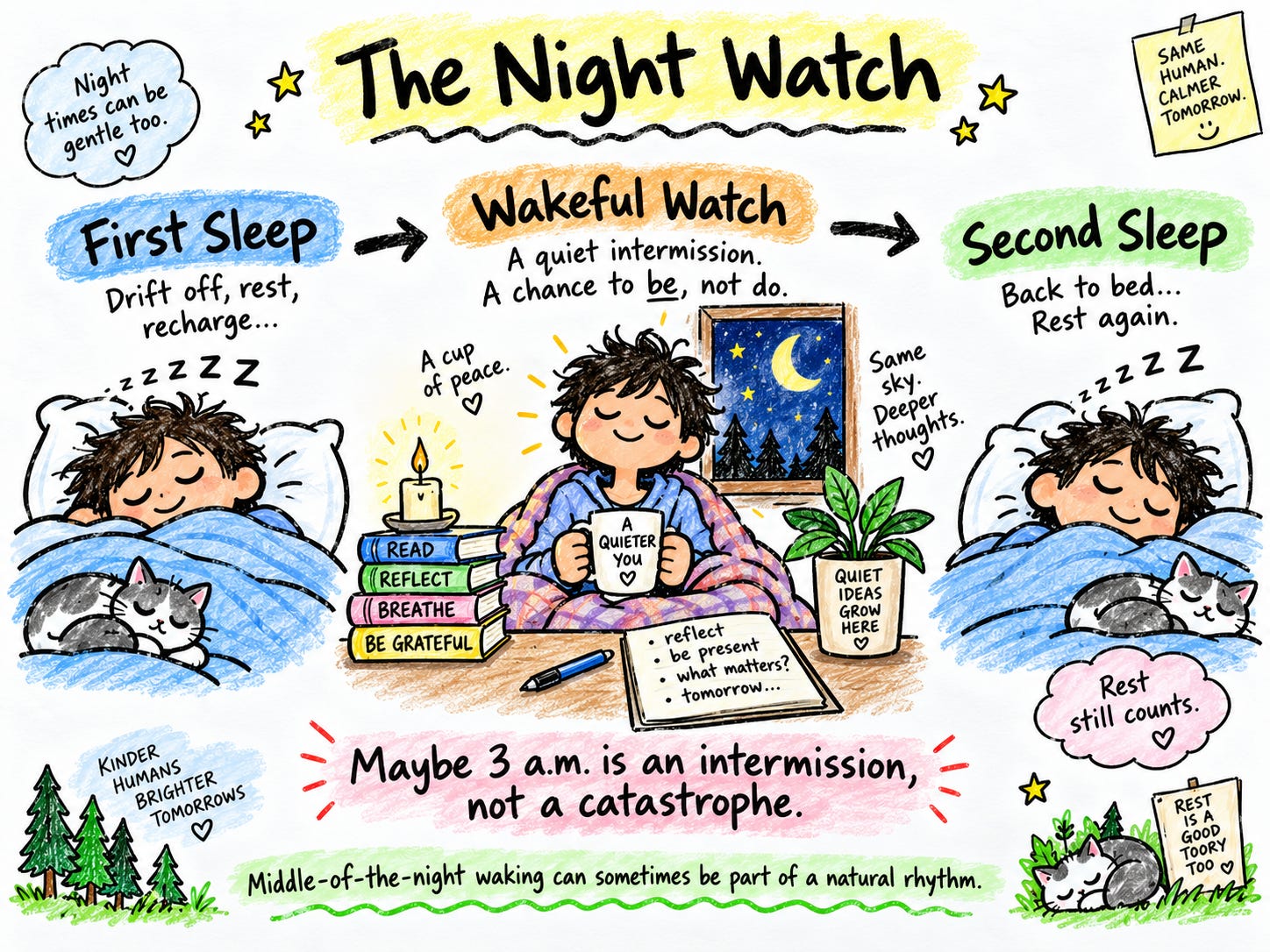
The “Night Watch:” Middle-of-the-Night Waking is natural… can you believe it? Before electricity, humans naturally slept in two shifts (”first sleep” and “second sleep”) separated by an hour or so of wakefulness known as the “watch.” No, not to watch Late Night with Conan O’Brian. The Watch was seen as a time for “spiritual reflection, contemplation,” or intimacy. Wow. Yes. Try that! I love to sit up straight and meditate at this time. Sitting helps the meditation get much deeper. And because you’re hopefully relaxed and trancey from sleep, you can actually go even deeper because of that as well. It can be really easy to get into blissful states like this. Send that bliss down to baby you.
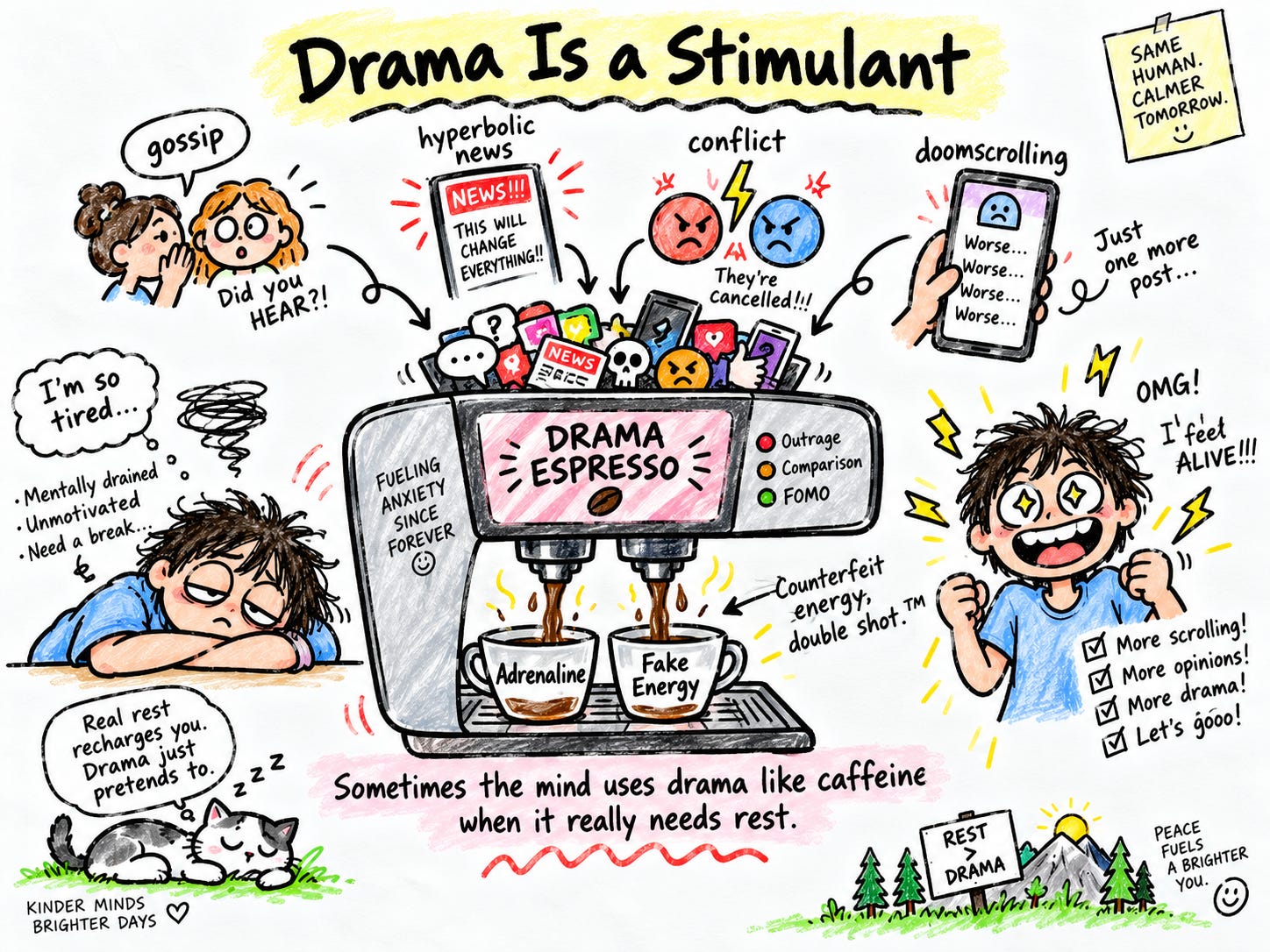
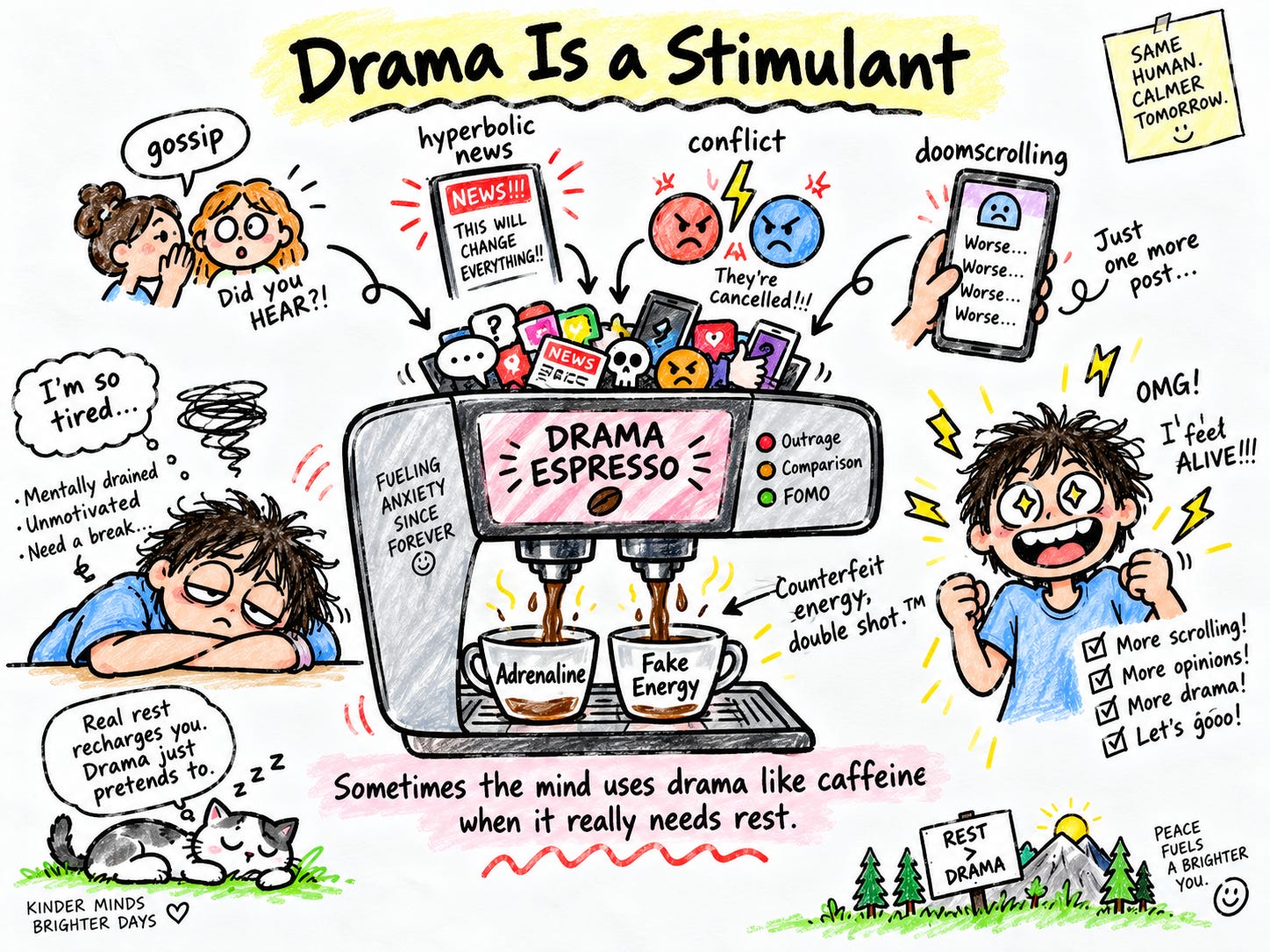
“Counterfeit Energies”: Drama is a Stimulant. We (hopefully) know caffeine and sugar are stimulants, but Naiman identifies “gratuitous drama” (gossip anyone?) as a primary source of artificial energy used to mask exhaustion. When we are sleep-deprived (or avoiding inner troubles), we subconsciously seek out “hyperbolic” news or even interpersonal conflict to trigger an adrenaline rush. Drama queen time!
Depression as a “Call for Deep Rest:” Conventional medicine views depression as a disorder to be fixed, often with SSRIs that suppress REM sleep (dreaming). Others may self-medicate with weed or other drugs which can also block dreams and mess up natural deep sleep. Yes, nightmares suck, but dreaming is essential for processing emotion. Dreams also show you what you need to work on in the day. By chemically suppressing dreams to treat depression (or anxiety or other issues), we could cut out the very mechanism the mind uses to heal itself. And as for the fatigue that depression casues, Naiman suggests it’s a protective mechanism trying to pull us out of the external world and into the internal world of the dream to heal. Basically, everything bad was actually good. I also find depression has been key for some of my deepest peak spiritual experiences & realizations.
Sleeping Pills are Actually “Waking Pills.” Sleeping pills suppress deep sleep (Stages 3 and 4) and dreaming (REM). Thus, create junk sleep, which is as bad or worse than junk food, porn, etc. I have a whole section on this topic further down.
Grogginess is a Sacred “Coastal Zone.” We modern busy folk usually treat morning grogginess as a nuisance to be “fixed” with coffee. Naiman reframes this hypnopompic state as a “lush coastal zone of consciousness.” Awakening is a like a mini little “birth” process. Rushing it with alarms and caffeine is like a “forceps delivery” or “rude awakening.” Then you “got up on the wrong side of the bed” instead of feeling like a million bucks! This “half-dream, half-waking” state is offers access to creative inspiration and spiritual newness. I absolutely agree. We should linger in it rather than “snap out of it.” That’s why I try to wake up long before I need to, so I can enjoy massaging my feet and meditating! I also find if you wake up hours before you need to, this sacred zone becomes even more sacred and connects to lucid/astral meditation.
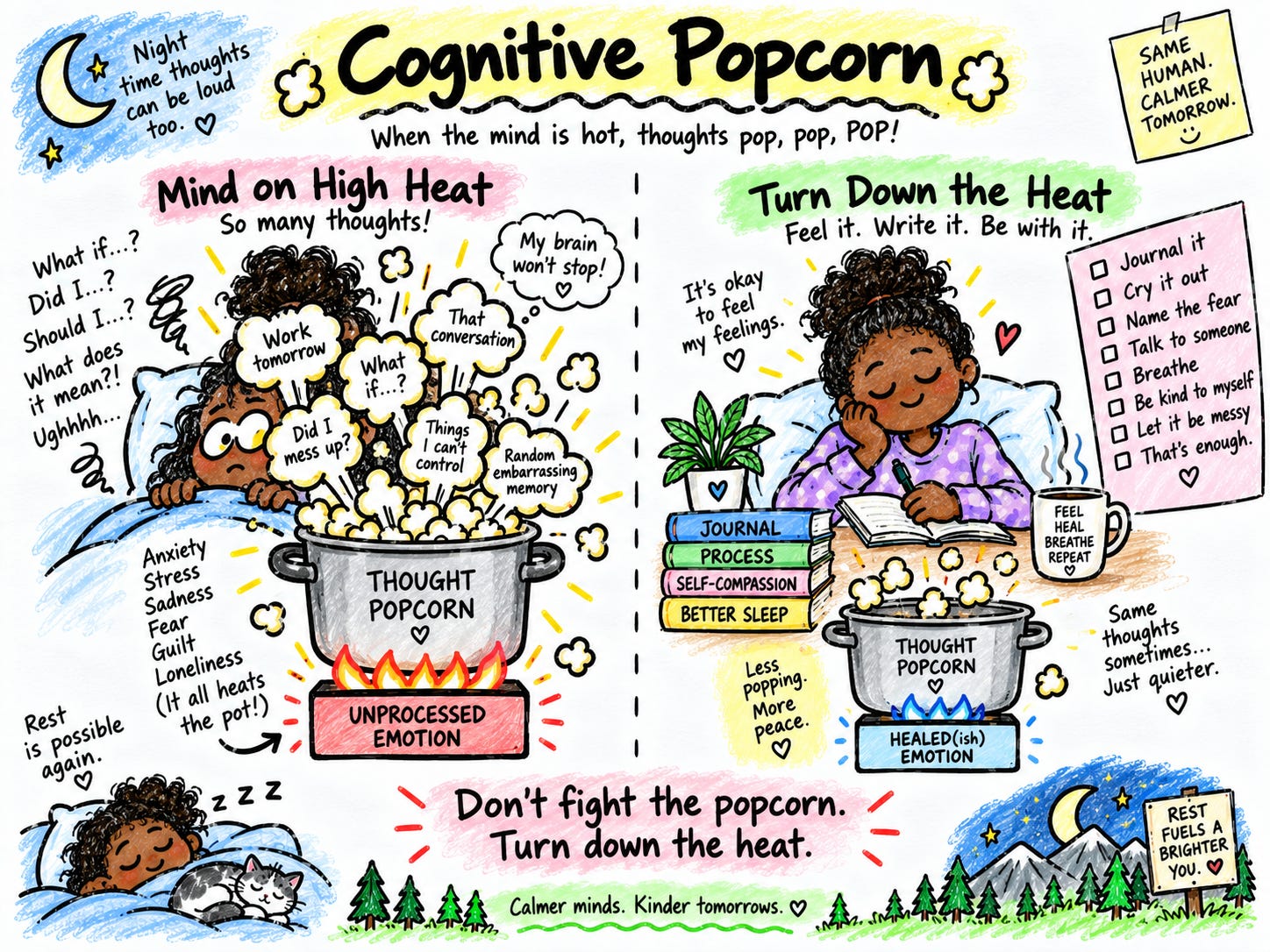
“Cognitive Popcorn”: The Heat of Unprocessed Emotion. People often can’t sleep because their minds are racing with thought/feeling circles. Just as heat makes popcorn pop, repressed emotional energy generates these thoughts which sometimes could seem random. You can’t stop the thoughts by brute force. Instead, “turn down the heat” by feeling/releasing the underlying emotion (e.g., crying, journaling, acknowledging fear) before bed. As they say: “Feel to Heal.
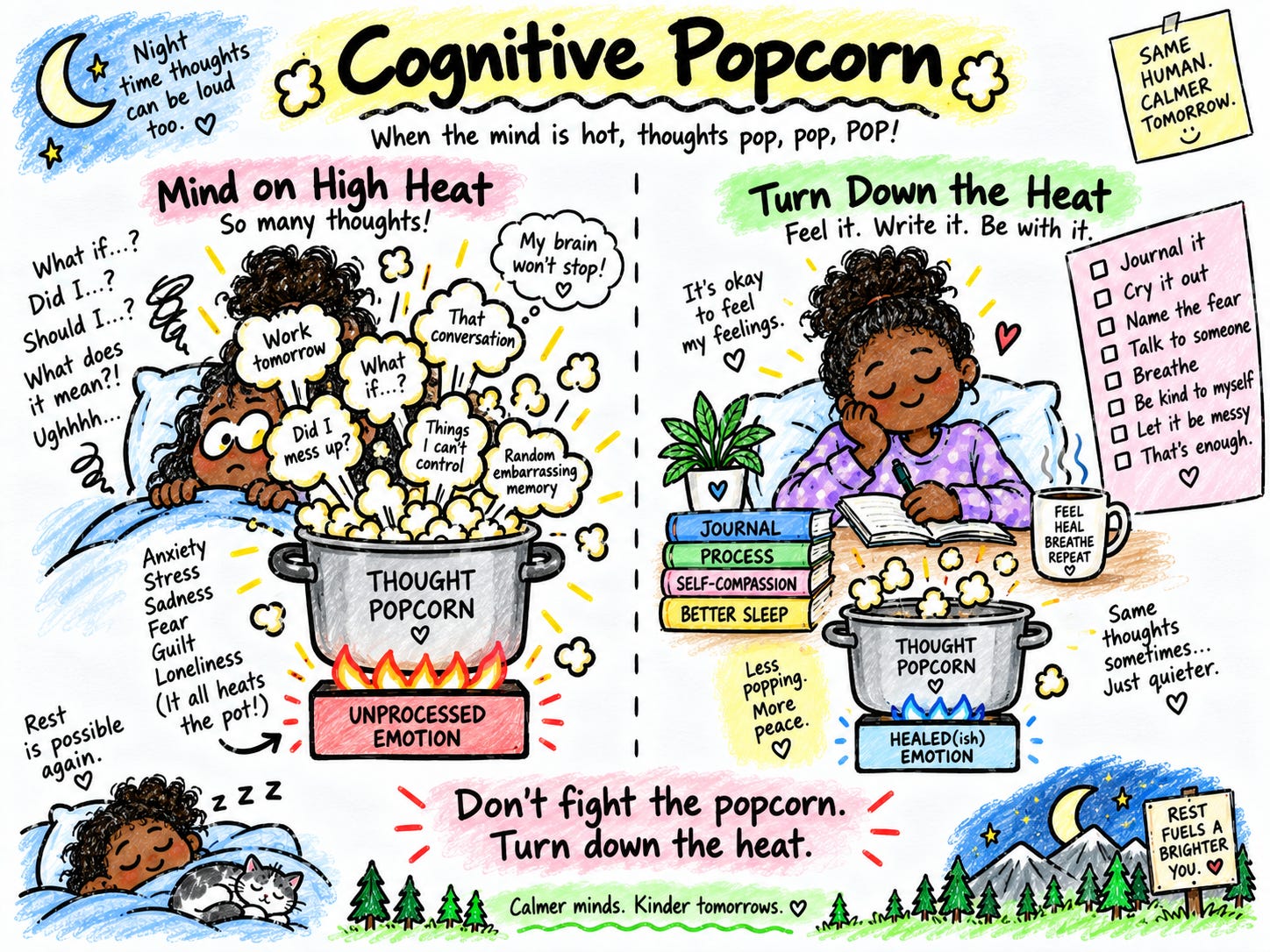
”
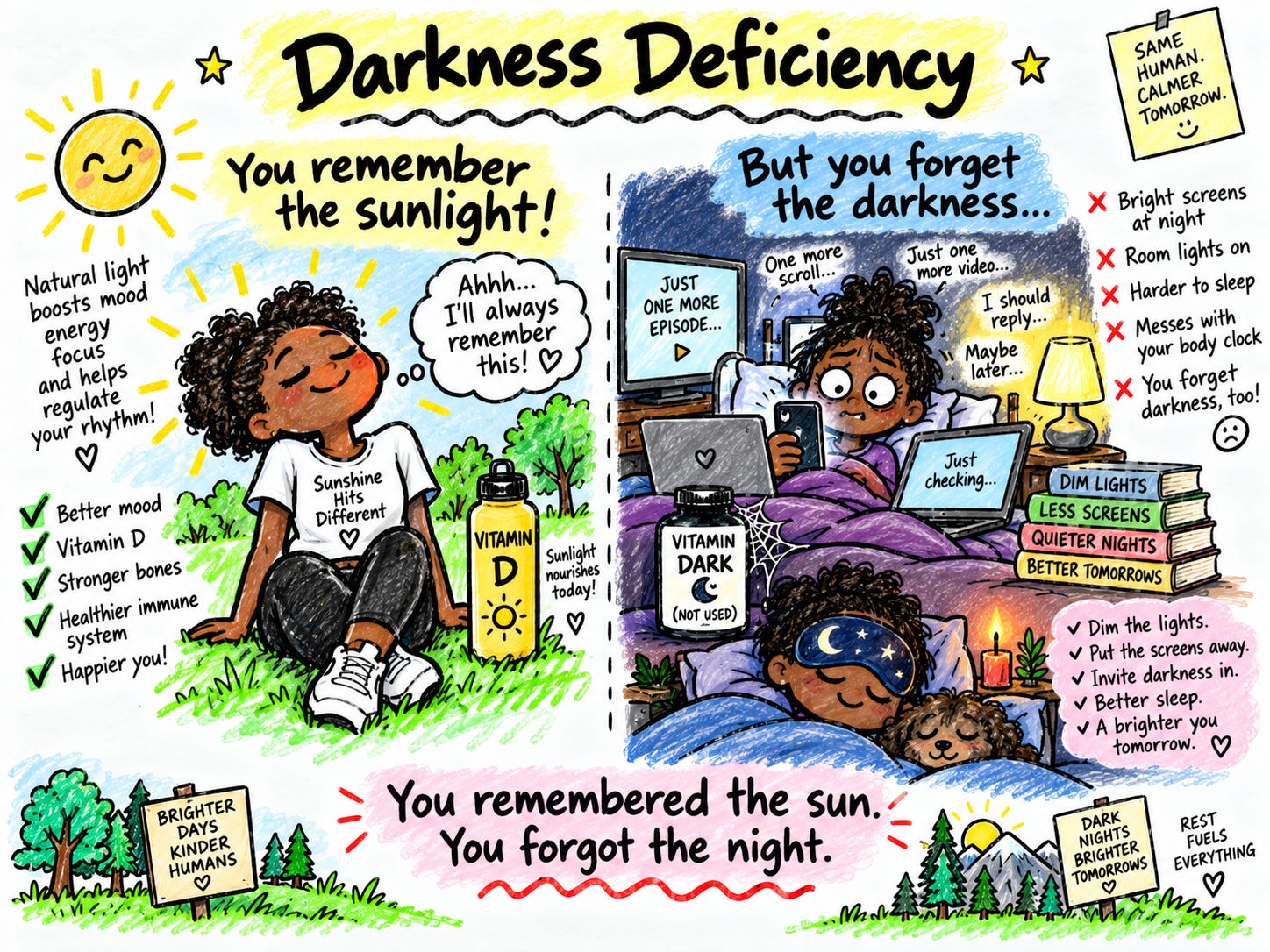
We Are “Darkness Deficient.” Society focuses heavily on Vitamin D and sunlight deficiency, and yes that’s true esp for office workers or video gamers, but Naiman argues we are also suffering from a “darkness deficiency.” In his view, darkness is not just the absence of light. It’s almost a different “vitamin D” that influences melatonin levels. After sunset, we should minimize our light exposure (wear sunglasses or blue blockers if you must be exposed to light, set your screen on night mode)
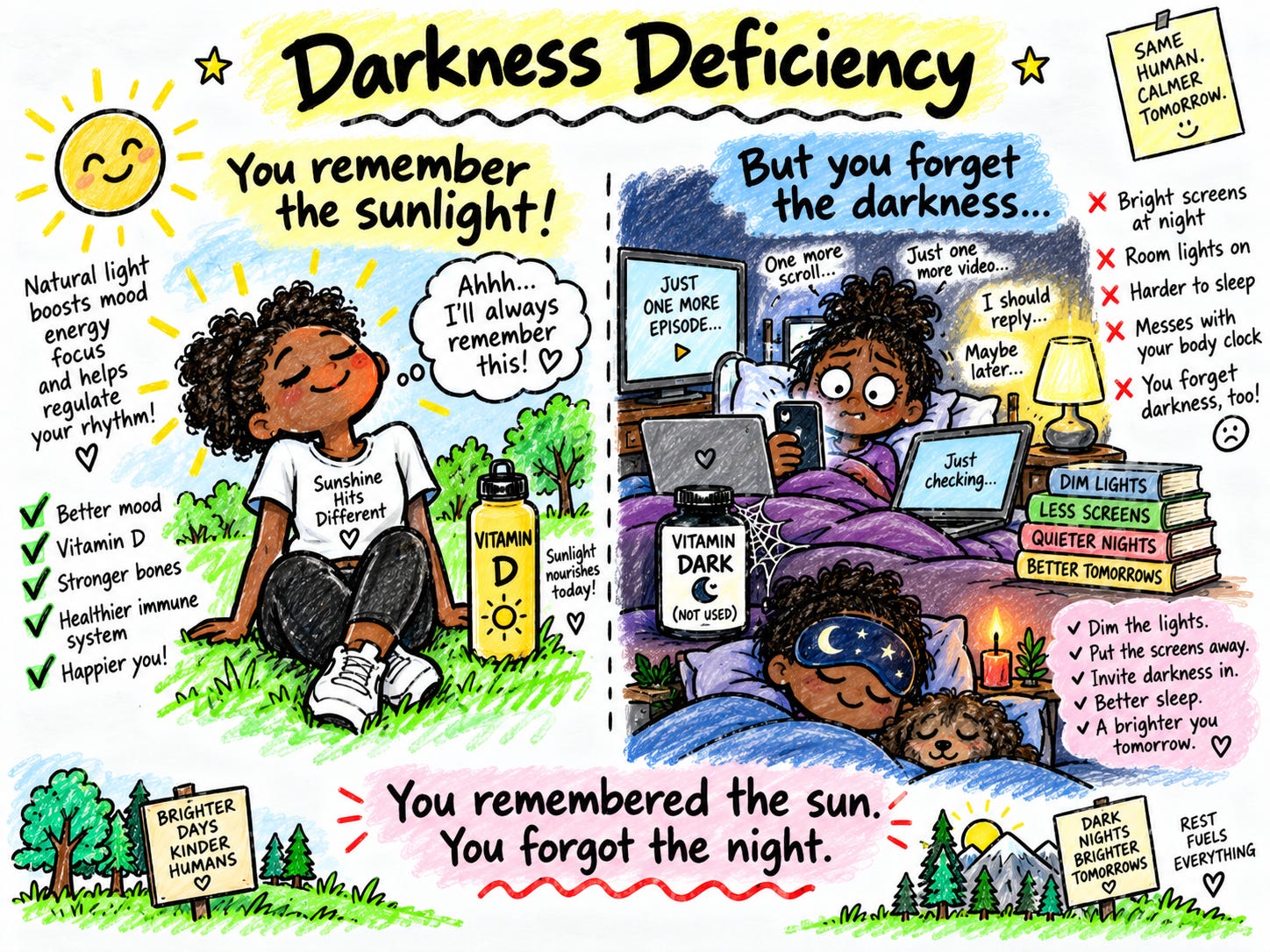
.
Spiritual Sleep: Surrendering the Ego. This one is really interesting. Naiman says the insomnia can be related to fear of sleep as a kind of death of consciousness. I know for a fact that’s how I experienced it when I was a kid sometimes, although not that deep. Thus, with greater spiritual trust, one can more happily let go of the waking, in-control ego-self..
The “Waking Dream:” This one will blow your mind. I often ask people, how do you know you’re awake vs asleep? Naiman doesn’t go that far into philosophy, but he says we can sort of “dream during the day” (not a daydream) by noticing synchronicities, symbols, and the surreal nature of daily events. In this way, we can bridge the gap between night and day, reducing the pressure for dreams to “rebound” violently as nightmares or symptoms. Caution: if you have trouble grounding in consensus reality, you should probably not go further in that direction by practicing this.
Sleep Hygiene Protocol
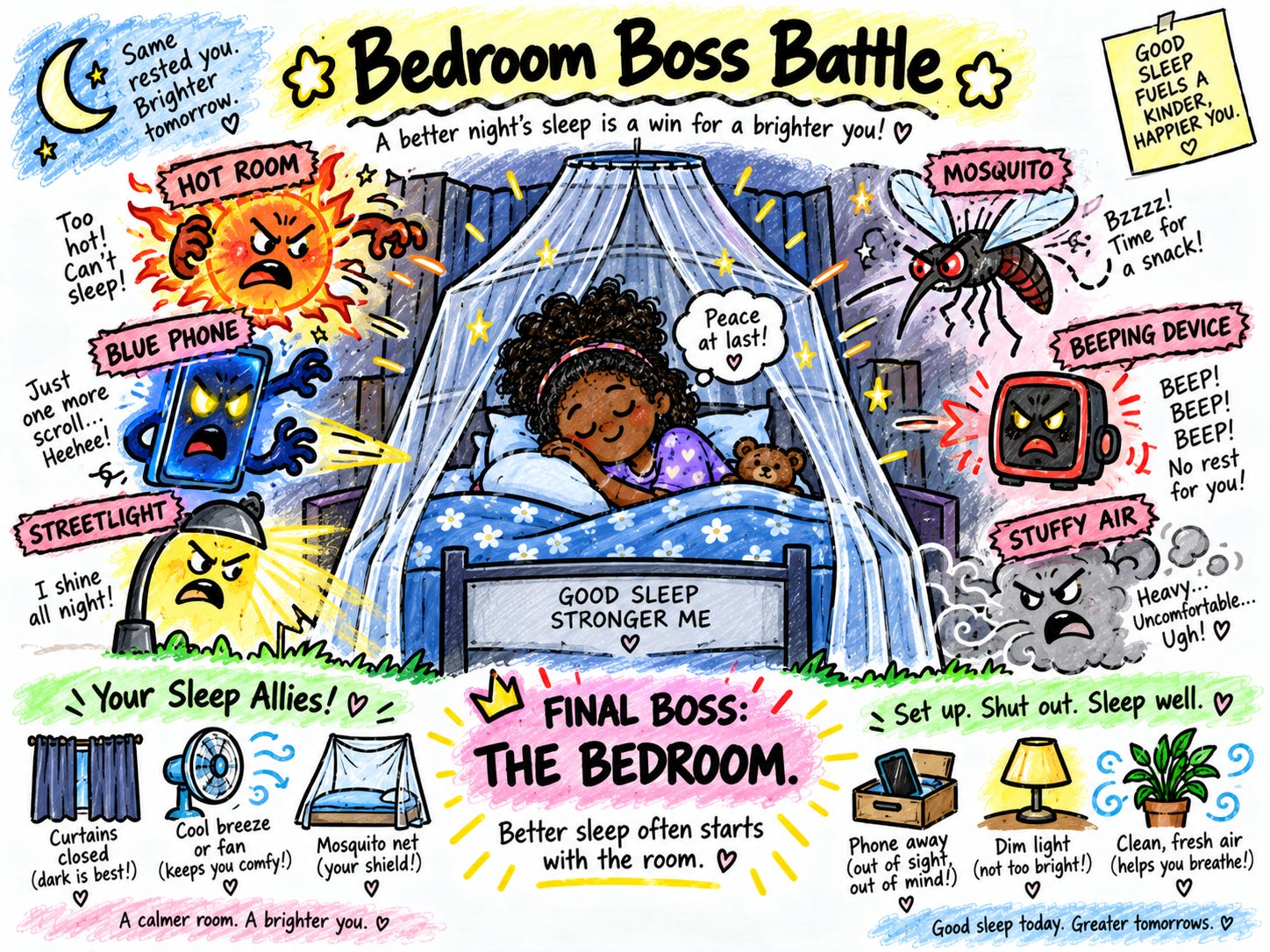
Once medical probs are ruled out, before taking anything for sleep, first build a baseline that gives your body a fair chance. You might not notice the benefits of some of these immediately, but that journal step from before can help you see the patterns and what’s actually helping.
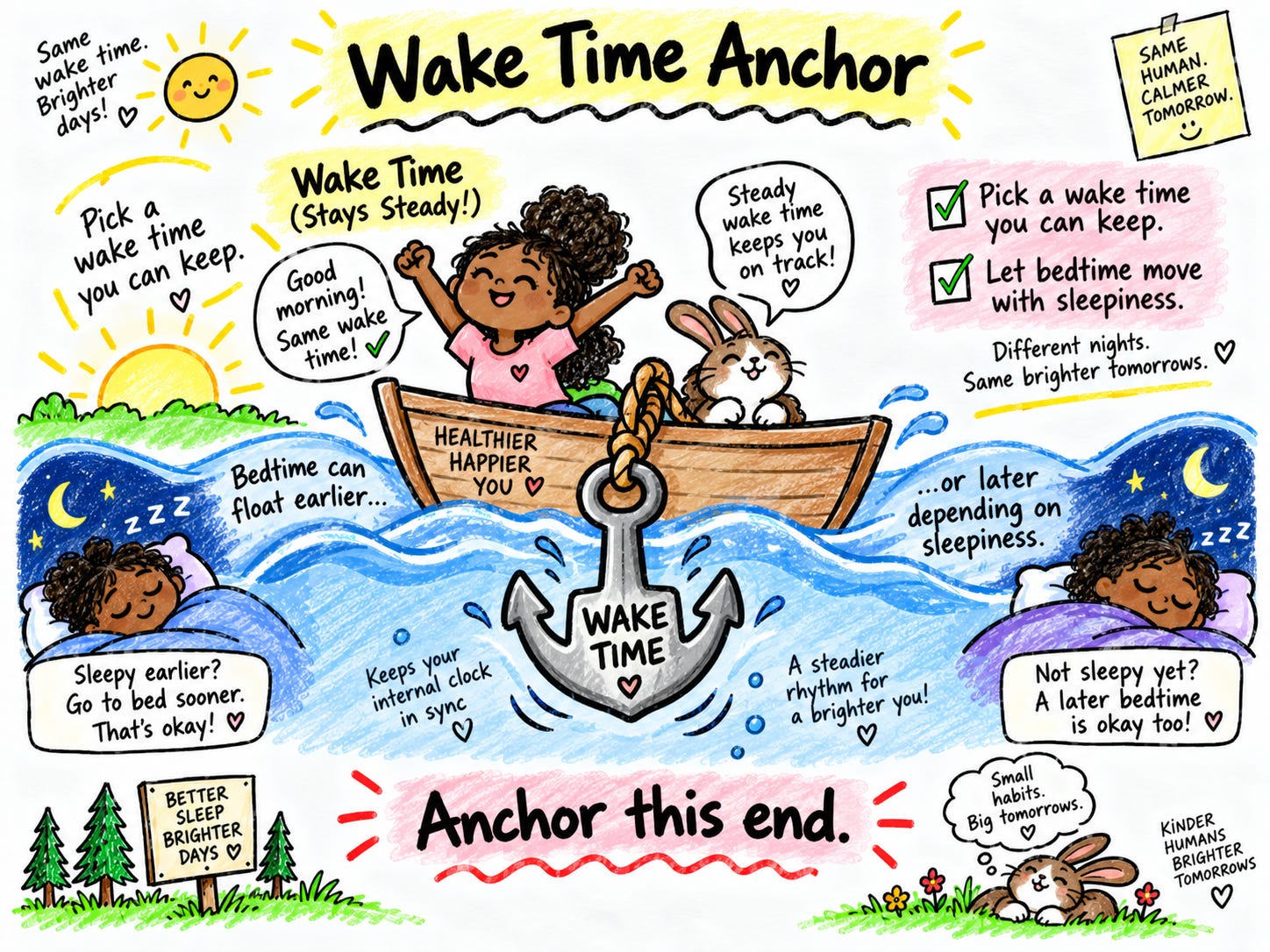
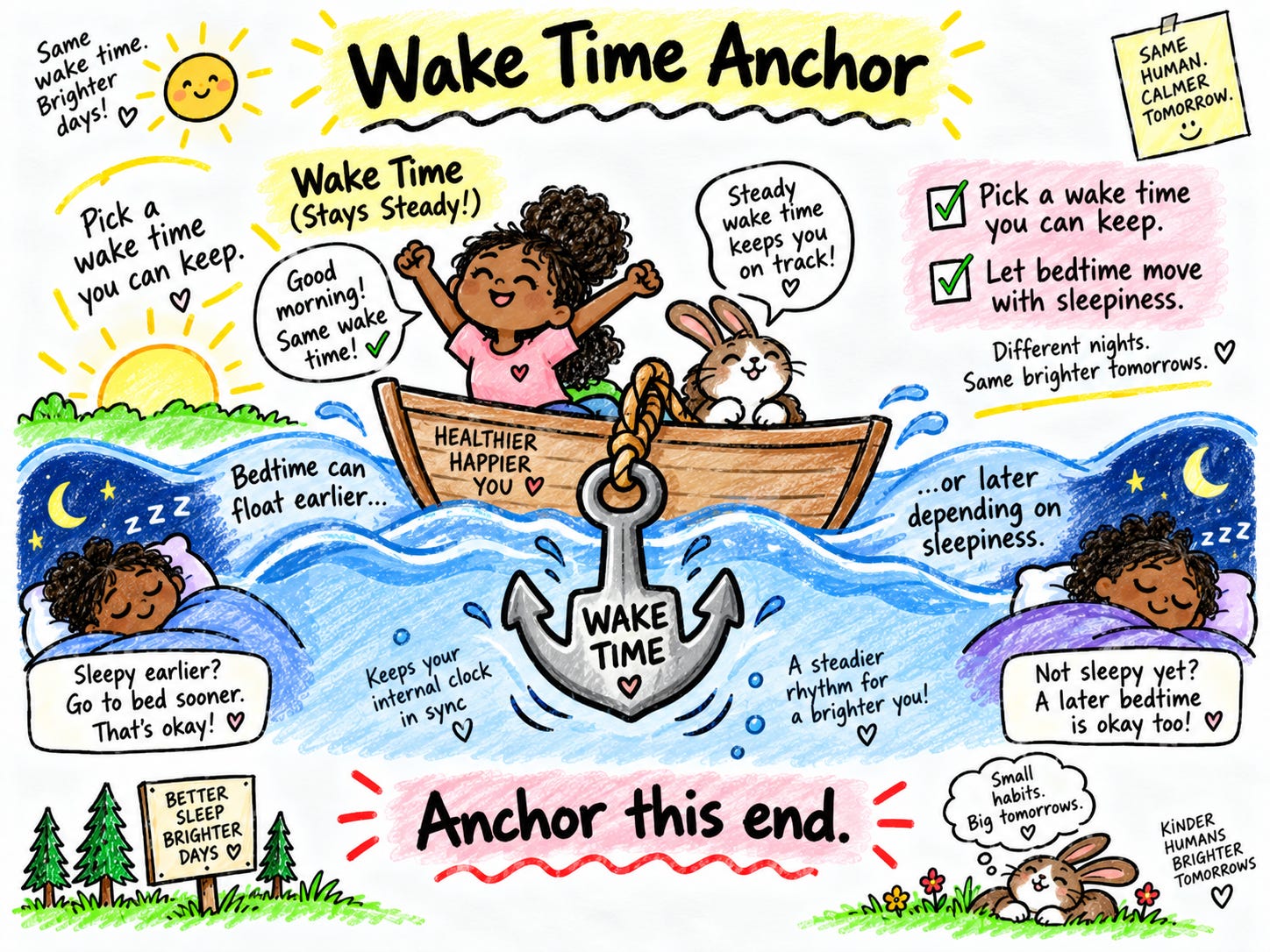
Keep a consistent wake time. Counter-intuitively, the most important anchor is usually what time you wake up, not what time you go to bed. So to fix that I’ve developed a patented 2 step plan as follows: Step 1: Pick a wake time you can keep on most days, including weekends. Step 2: Let bedtime move earlier or later based on sleepiness. No, it doesn’t work if you go to sleep like me at 5 a.m. and then wake up at 7 a.m. Don’t be a silly rabbit!
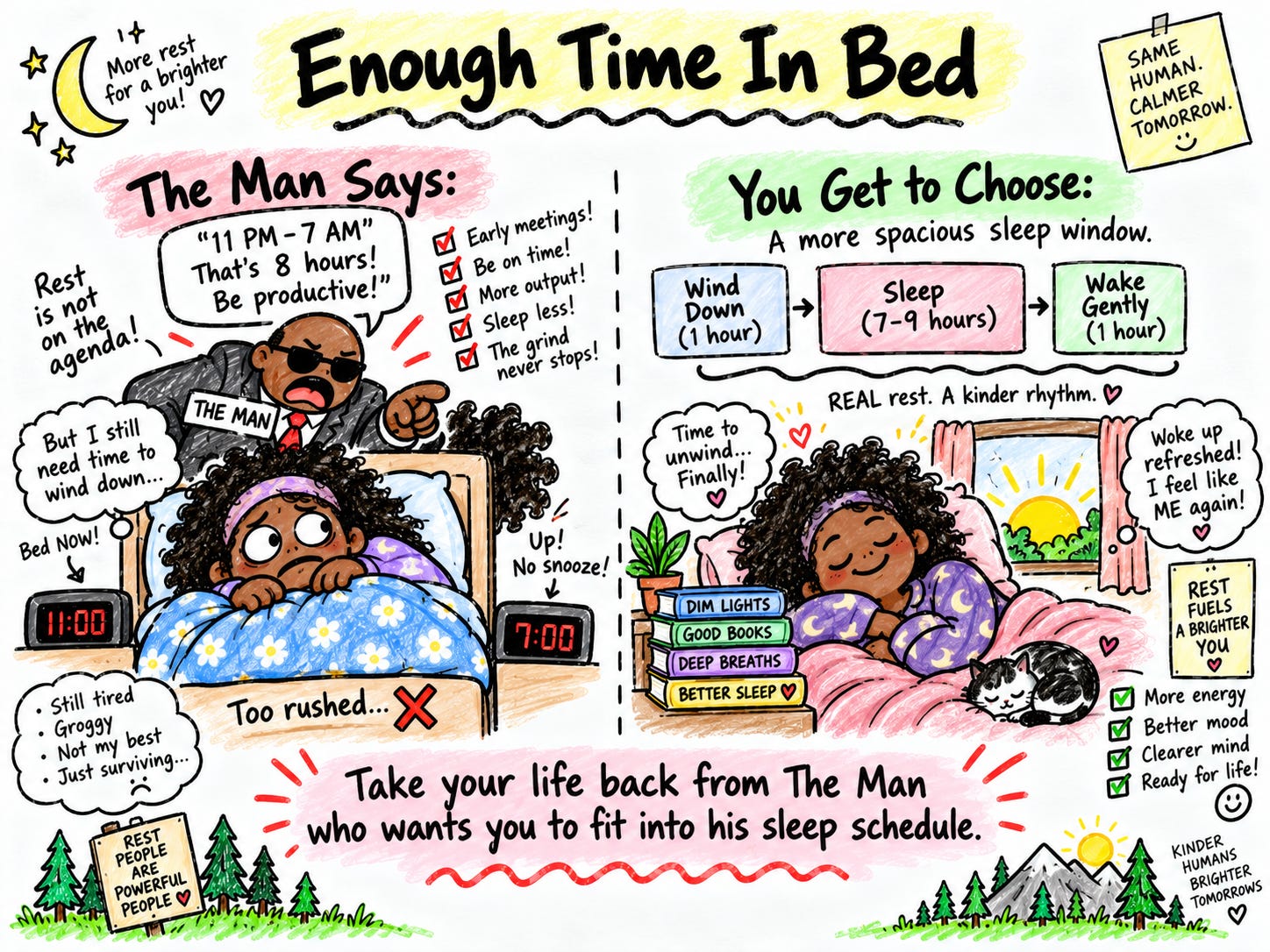
Give yourself enough time in bed. Oh. That’s what I was just saying. Most adults need at least seven hours of sleep, and many need more. And the thing is, if you need 7.5–9 hours of actual sleep, that means you need a longer sleep window to allow for meditation, falling asleep and brief awakenings. Take your life back from the Man who wants you to fit into his sleep schedule! 🤣

Use naps carefully. Mentioned this before. Naps or siestas, as they say in Cuba, are great, and I’m not knocking them if you sleep well at night. If you have insomnia, though, keep naps short, early, or just totally skip them while you reset your circadian rhythm. Long or late naps can naughtily steal sleep pressure from the night.
Avoid all stimulant drugs, including caffeine, completely, 100%. What?!! Yes, I don’t care if you hate me. Even when taken in the morning, they can subtly disrupt your sleep architecture at night. Stimulants destroy your HPA axis alignment and thyroid function. They are a gateway to all kinds of mental illness, as Dr. Josef explains, and they don’t even keep you truly awake. They activate your brain stem to make you feel alert, while other areas of your brain go to sleep, leading to impaired work and driving performance, and overconfidence. That’s how I crashed my driving instructor friend, Dee’s car when I was learning, because of coffee. Grrrrrrr!
Audit other sleep-disrupters: Alcohol can make you sleepy, but sleep ain’t the same thing as giving deep sleep. Again, did you wake up feeling great? Nicotine is stimulating. Even vitamin C (in oranges etc) and yogurt/ferments are stimulating. Large meals, spicy meals, meals with unhealthy fats (see healthy fats section at top), or fermented or with vit C, and too much fluid late at night can worsen reflux, heat, awakenings, or nighttime pee pee frequeny-yy. Do an audit of all your meds to see if GPT finds evidence of potential sleep disruption.
Get plenty of exercise during the day so that your body is really tired at night. I highly recommend Yin Yoga for the myriad of benefits.
Turn off devices with screens, alerts, and emotionally-activating content a few hours before bed. Keep phone out of reach if possible. Unplug wifi and all electronics. Some people might need to get an expensive Blushield device if they can’t get out of the city’s toxic airwaves (and electric power). I tried their top model and it was absolutely incredible for relaxation (although I didn’t notice a sleep benefit as some others did).
Check the temperature in your bedroom! At slightly warmer temperatures, sleep quality is dramatically reduced. If you have the cash, one of the best solutions in 2026 seems to be the EightSleep temperature-controlled sleep-mattress. They have a money-back 30 day guarantee, so it’s worth a shot, and they have great forum reviews. The “base” option also helps with snoring by lifting your head when it hears you snoring. But some people don’t like being tracked by their app.
Check air quality! Most people are in houses without proper ventilation and even mold contamination. See my detox guide for mold help.
Fans just blow hot air, so while they do cool your body, they don’t cool your brain since the blowing air doesn’t penetrate that deep. Can help to fall asleep, but won’t give deep sleep usually.
Air conditioners can actually remove the heat from the room, but they often emit mold if not cleaned regularly and thoroughly with non-toxic cleaners like H2O2. And they can dry the air too much, causing dry eyes and sinuses, especially when pointed at you or on full blast at night (better to blast it before you sleep). Even without mold, air conditioners do not provide the fresh air that you get from opening windows.
Obviously, opening windows can let mosquitos in, so get a large pop-up mosquito net to put on your bed (the drop down ones almost never close correctly, which is absurd).
Turn off the lights. If you must use light at night, Get rid of blue light, and only use incandescent lights. Even better, use red light or candlelight only as needed, and turn your screens onto max red light/night light mode. I find red light really does make me sleepier and more relaxed. The best red lights are sold by EMR-TEK. If there’s unavoidable light in your room, wear a comfortable eye mask to block it as much as possible.
Avoid large meals close to bed, especially if you get reflux, heat, congestion, or nighttime awakenings. If hunger keeps you awake, some warm, whole organic A2/A2 cream for fat and tryptophan (ideally hygienic raw goat, sheep, camel, donkey milk), with a little raw honey can help.
Replenish the probiotics in your gut that are beneficial for sleep.
SIBO yogurt is a good place to start for this and general health. Research here.

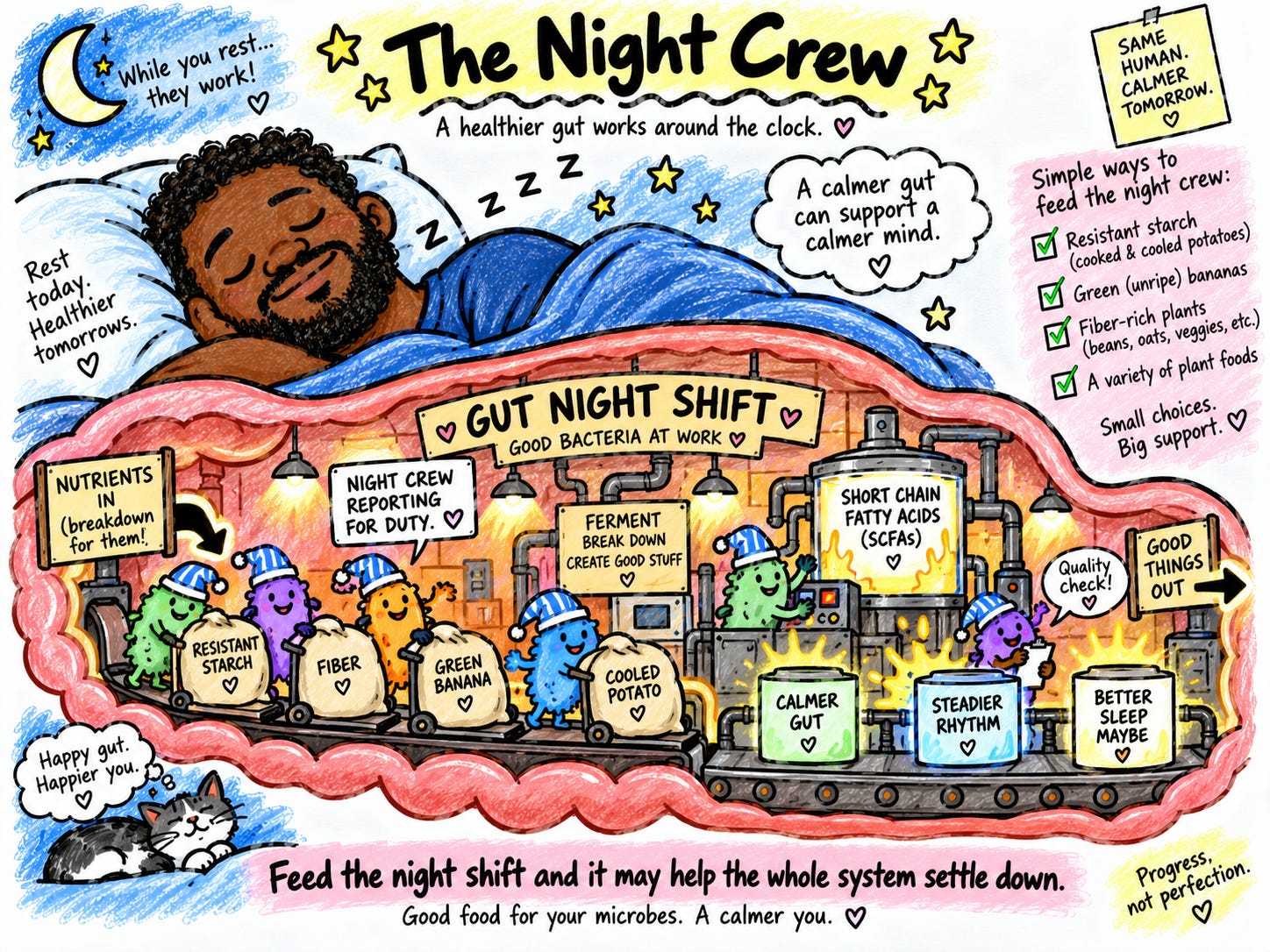
See if you can handle slowly building up your level of dietary resistant starch to naturally build up butyrate-producing bacteria and fix your gut to heal your brain and promote deep sleep:
Journal: Write down everything that is on your mind so you can stop trying to remember it. Ideally write with pen and paper since your phone should be off.
Take a hot Epsom salt bath or at least splash Epsom salt on your armpits (unless you are stuck in catabolism, then use Epsom salt in morning). Eat 1-2 servings of Magnesium L-Threonate. While Epsom salt does go to the brain, some people find that Mag threonate works better for their sleep issues. Be careful with kidney disease, diarrhea, low blood pressure, medication interactions. A warm bath by itself before bed can also be relaxing.
Go to bed 10hrs before sunrise so you don’t feel pressure to immediately fall asleep and you can enjoy some self-massage (wink wink).
Listen: Use sound if it helps you relax: yawning, silence, rain, crickets, gentle music, a boring podcast, or white noise. Treat brainwave tones and device-based audio as experimental. If they give you headaches, agitation, or sleep disruption, stop. The Nimja sleep hypnosis playlist is a real gamechanger. I also highly recommend downloading the audio-recordings of the Buddhist suttas.
My friend Kevin suggests listening to a soothing podcast like from Eckhart Tolle. You can play tones which match the average brainwave pattern during sleep. They are sold at MindAware for $2-$5. But before that, detox your brain with :
.
Do self massage and gentle body scan. Don’t focus too much on doing a deep body scan, as this can put your mind into concentration mode. We just want to mentally touch the body with a feather so it feels heard and held.
Do masseter jaw muscle massage to prevent jaw grinding and relax (magnesium also helps). If you’re still grinding your teeth, you should get your dentist to make a custom mouth guard—it’s not super comfortable, but it’s a lot better than grinding.
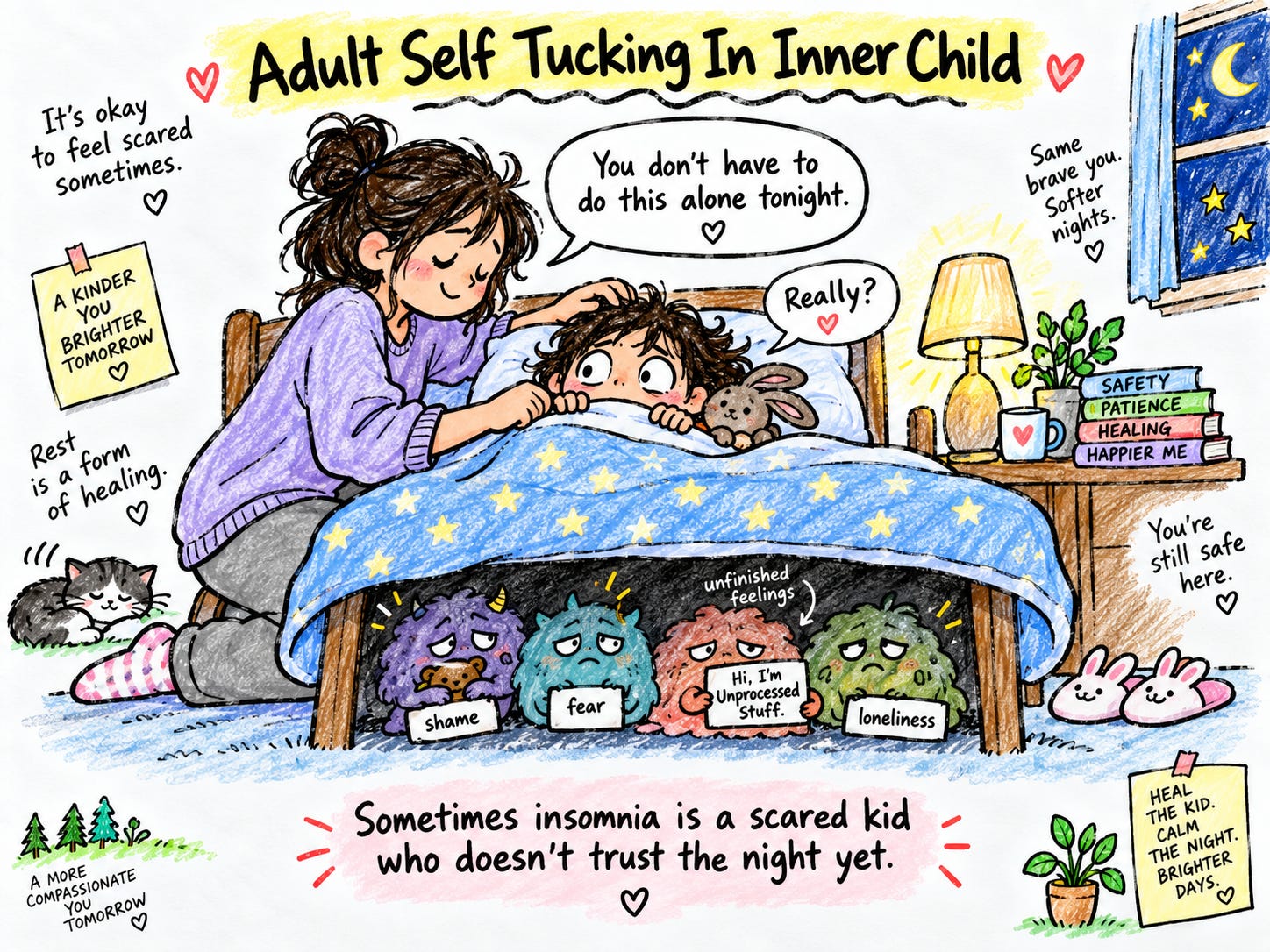
Love and talk your inner child. Hold one hand on heart chakra and the other on solar plexus. Don’t worry if it seems one-sided at first

.
Forgive everyone and yourself and promise to be better tomorrow.
Meditation can help or hurt sleep. See how it affects you. Don’t meditate while lying down, in general, as that can put you into a state that’s not quite sleep and not quite meditation, which is frustrating. More like daydreaming. The types of meditations that are better for sleep include dream imagery and loving kindness meditation. Try those while sitting up until you get tired and fall down to sleep. Avoid the focusing, body scanning, mindfulness and awareness meditations, although when those are done during the mid-night Watch period, they can lead to very spiritual and profound dreams after (see my lucid guide).
Don’t force sleep unless you must:
The goal is to teach your nervous system that bed means sleep, not effort, frustration, doomscrolling, hanky panky… ok well, actually hanky panky can work but:
I have sleep supplement advice after this section.
If you do have to drive, remember that sleepy driving is as dangerous as drunk driving, and as stated earlier, caffeine is a fake fix.
Cognitive Behavioral Therapy for Insomnia (CBT-I) does have good evidence of effectiveness for most people (up to 80% get significant benefit akin to sleep medications), but it should be approached with caution. CBT-I therapists would tell you to get out of bed entirely and go do something else, but this can sometimes backfire as it can send the signal to your brain that it’s not time for sleep.
Also, CBT-I itself can backfire for people who already have sleep anxiety, as it tends to be rigid in its rules and goals. The point is retraining the bed-sleep association without turning sleep into a performance test.
If you want to try CBT-I in app form Sleep Doctor is the best-rated app.
Use Special Breathwork Techniques: Buteyko breathing was mentioned above in the Apnea section, but Vagal Blitz is the insta-fix for sleep if you have the energy for it. Wim Hof breathwork (which is one part of Vagal Blitz) has helped me to get the type of sleep where I wake up in the morning literally in an MDMA infinite love state for an hour! Avoid intense breathwork if you are pregnant, prone to fainting, seizures, panic, arrhythmias, chest pain, or uncontrolled blood pressure.
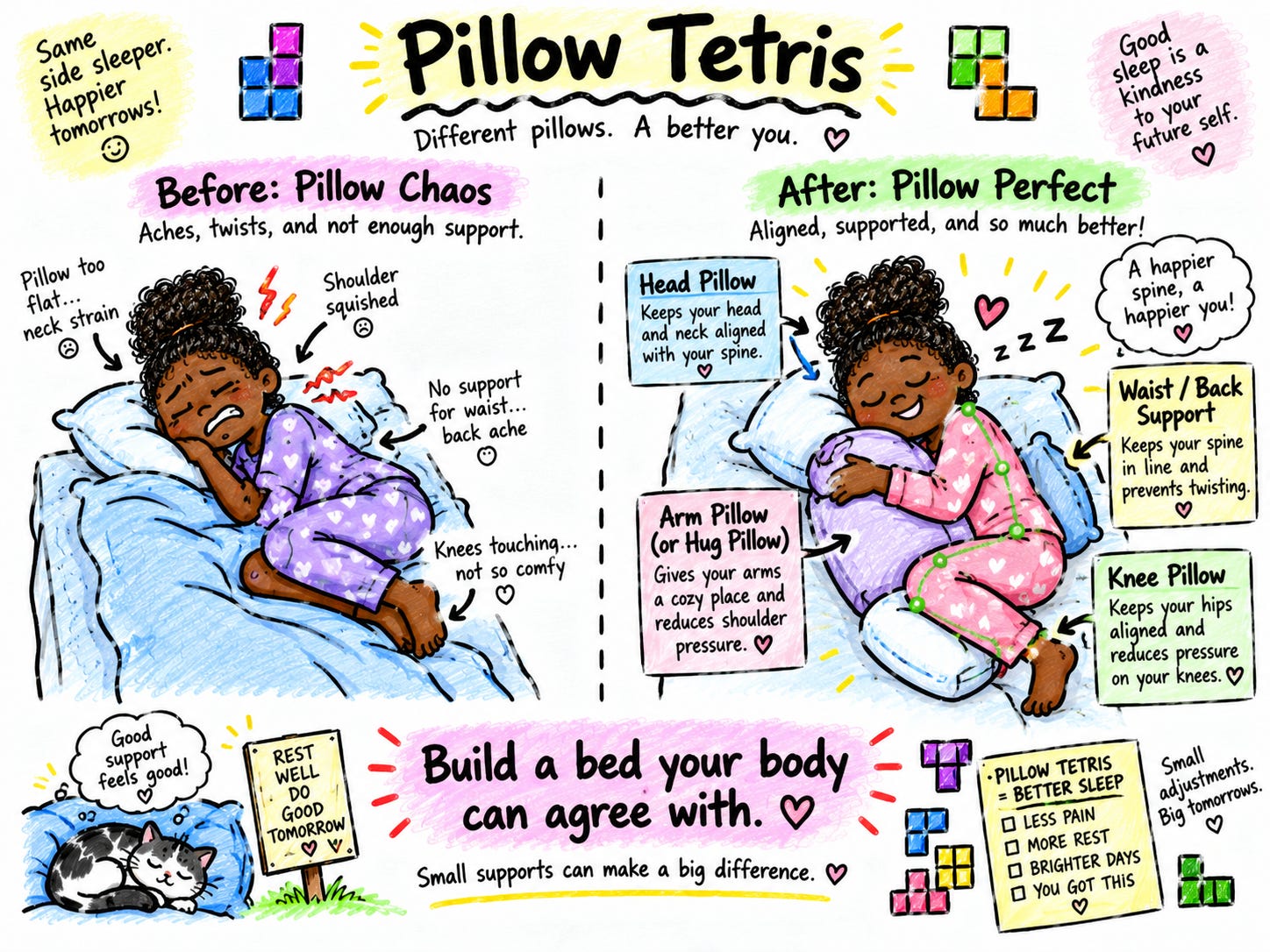
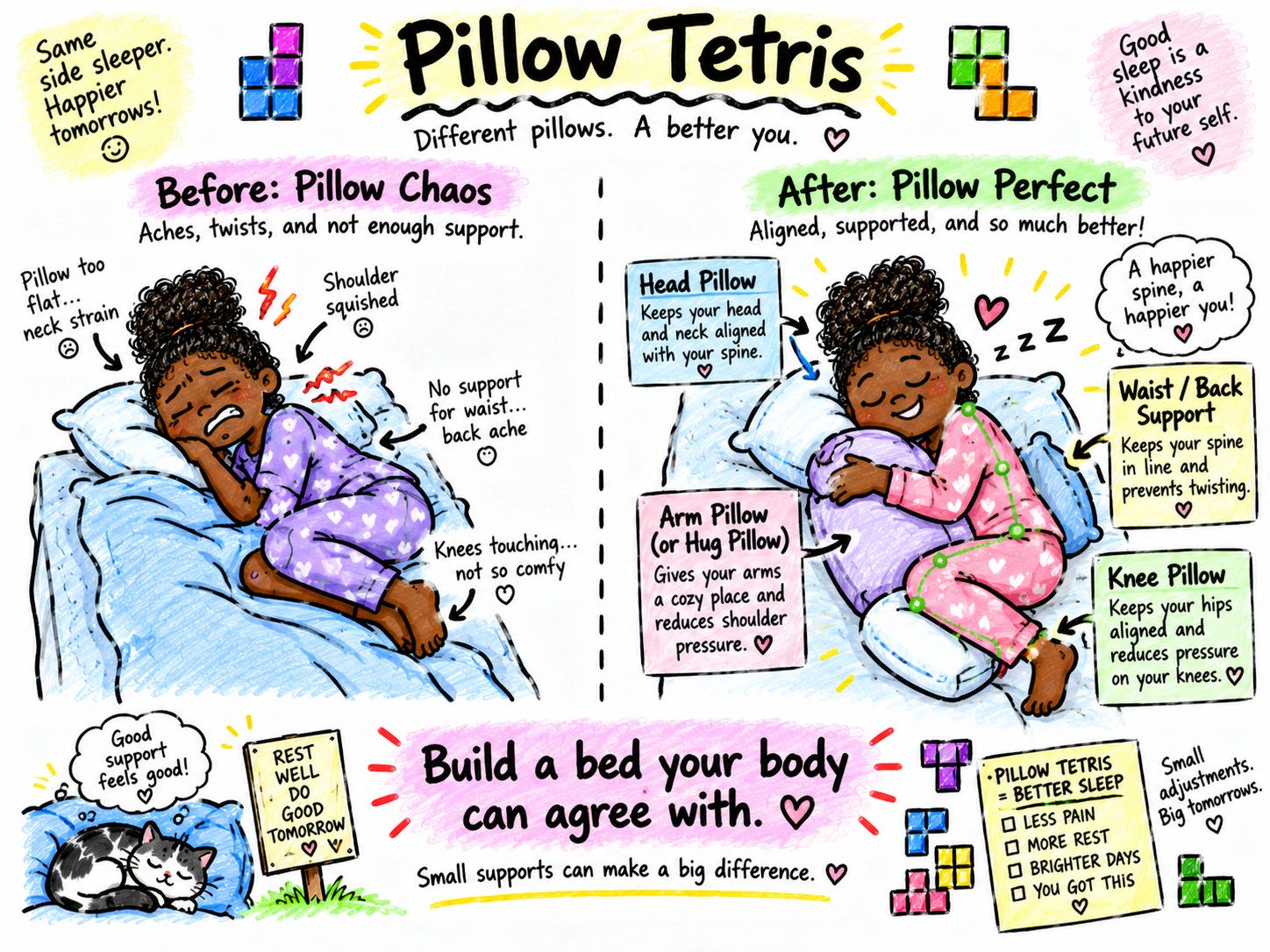
Using the correct Zeolite pillow(s) This is critical to relax your whole body, especially your trapezius muscle and hips (knee pillow for side sleepers). Some people like the Japanese Hug Pillow, while others might prefer the trapezius neck pillow, with a separate pillow for the knees.
I always turn my head pillow 45 degrees since I’m a side sleeper, but here is one designed just for side sleepers. I also find i need some extra cushioning on my waist to keep my spin straight. Some folks actually find they sleep best on the hard floor, although that has never worked for me no matter how much I’ve tried.
But what the heck am I talking about with Zeolite?? I recently discovered that I could cure insomnia rapidly just by putting a bag of zeolite against my skin. Put a bag of it in your pillow! I’ve only tried it so far with a proper cleaned zeolite (ZeoCharge brand). There is research showing zeolite improves sleep when taken orally, but nobody has studied this skin-contact-thru-bag method.
.
Sleep curled up on your left side to aid digestion and glymphatic drainage. I find sleeping on my back is much better for lucid dreaming and psychedelic-type dreams, though. Some people can’t sleep on their side. It depends how you slept as a baby.
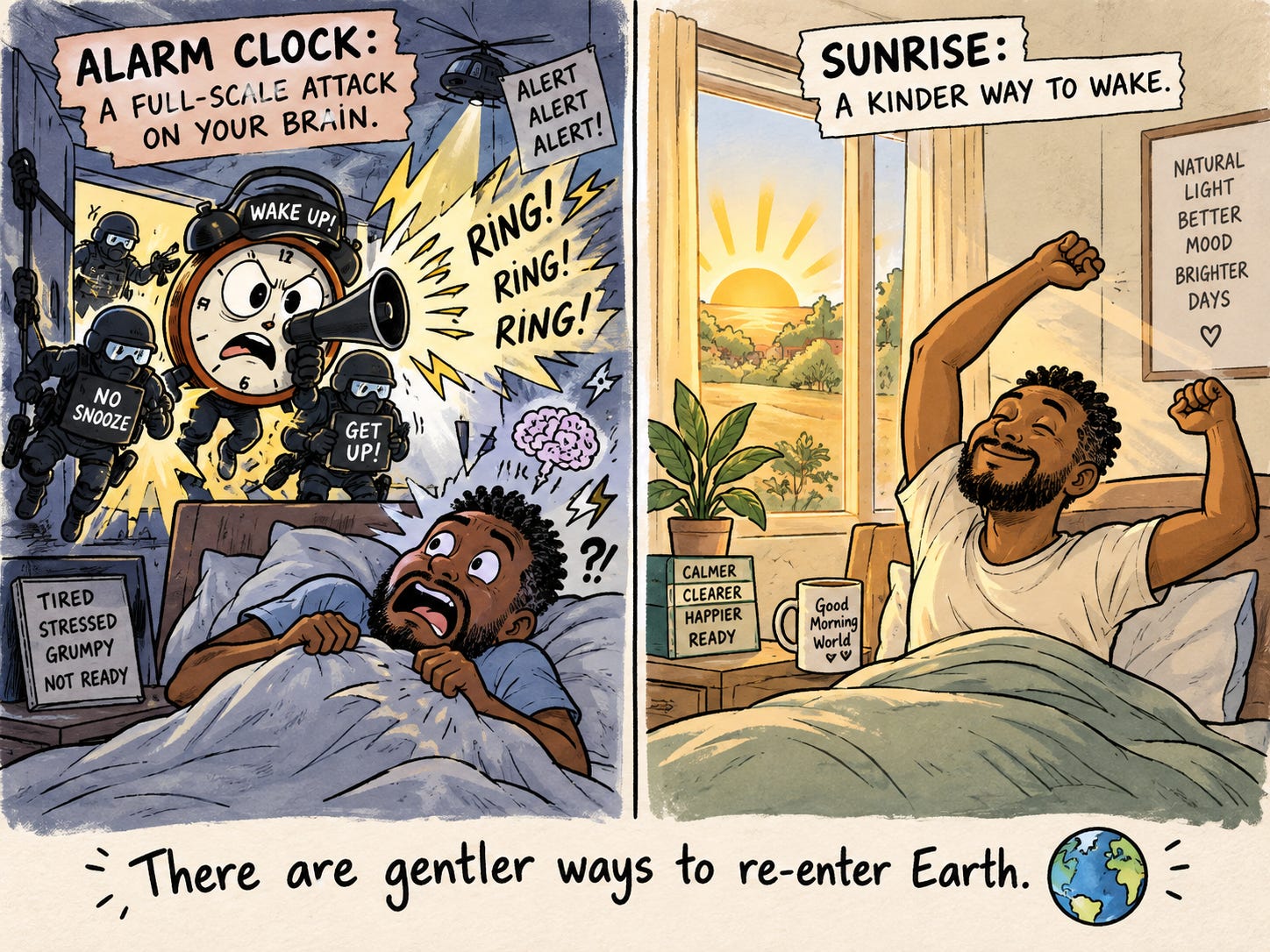
Let sunrise wake you. Don’t turn phone on. Don’t use alarm to wake up unless it’s a gentle sunrise mimic type of alarm, otherwise you will often wake up in the wrong sleep cycle, which is why you feel bad instead of amazing upon waking (sleep cycles explained here). Try to wake up well before you must get out of bed so you have time to meditate and love yourself!

My dad always woke up exactly when he wanted to just by asking “the spirits” to wake him at that time. It does work, if you believe in it, and if you aren’t afraid of waking up at the wrong time.
Do loving kindness meditation and massage your feet until it’s really time you must get out of bed.
Avoid annoying alarms: these will wake you up from deep sleep and you’ll start the day off feeling crappy instead of like a million bucks. The most natural way to wake up is with the sun, but if you can’t do that, you can get a sun alarm clock that gets brighter slowly. You could also use a soothing spiritual music alarm (like Chantress Seba) that gets louder very slowly.
Get early sun on your skin as possible on as much skin as possible (esp. torso). The infrared light from the red sun is critical to regulate your circadian rhythm. It also protects you from UV rays later in the day. Avoiding industrial oils in your diet also helps with that. Continue getting as much sun as possible on your body (without burning) all day.
If you work nights and can’t find a healthier job yet, get bright sun-mimicking full-spectrum light at the biological time you want to be daytime, and protect darkness at the biological time you want to be night.
If you are a natural night owl trying to shift earlier, move gradually. Use bright outdoor light soon after waking, dim light earlier in the evening, and shift wake time in small steps rather than forcing a huge jump.
Exercise during the day to give your body the signal that you physically need sleep to recover.

The Worst Sleep Drugs You Already Know
This would have been a funny-ass guide if it started by telling you to take some Ambien or smoke some Indica, right? If you’ve read this far, you surely already know that many popular sleep drugs are basically an Emergency Room medicine.
Any sleep aid that causes next-day or long-term impairment, tolerance, withdrawal, undesirable mood changes, breathing suppression, or loss of dream recall should be treated cautiously. And by cautiously I mean thrown in the round bin from the three-pointer line.
But hold on, it’s time for the legal disclaimer: Do not abruptly stop prescribed medication to improve sleep. Ask your doctor how to safely discontinue individual meds. And be careful with the powerful sleep drugs because combining them or taking too much can cause you to stop breathing.
Benzo-type drugs
Many people rely on benzodiazepines (aka benzos), or the so-called “non-benzo” Z drugs, like Ambien (generic name: zolpidem), which destroy your hippocampus, memory, processing capacity, and GABA receptor sensitivity (making you paranoid and suffering panic attacks). They can also cause dangerous sleep driving, sleep walking, sleep eating, sleep sex, and more.
These drugs are also incredibly dangerous to get off, taking months to years, and most people never manage to get off them. There is only one “benzo-ish” (GABA-B agonist) drug that actually does give very deep sleep (for some), Phenibut, but it is the most addictive one, so def. for emergencies only. And if you’re trying to quit it, make sure you have Baclofen on hand to prevent seizures, because regular benzo drugs won’t help with getting off Phenibut.
Jordan Peterson, the famous psychologist-influencer, got addicted to benzos his doctor prescribed for anxiety. It took his family years to find a rehab center that actually helped (in Russia somewhere). It actually makes sense it was in Russia because modern peptide medicine (and scenar tech) comes from Russian research. But even these miraculous peptides weren't able to help him very fast. One thing that he should have known about is the Syrian Rue cure for benzo withdrawal, and Selank for safe relaxation. And tragically, his health got worse after stopping the benzos also, likely due to the mitochondrial damage caused by the protracted benzo withdrawal.
Weed
Many other people rely on indica weed for sleep. That’s a heck of a lot healthier than a benzo drug, but cannabis in general, and especially THC, still does disrupt sleep architecture.
You’ll probably notice your dreams are either gone completely or toned down quite a bit. That’s what a lot of people use it for, specifically, because they suffer from nightmares. The problem is that those nightmares are your subconscious trying to do the emotional processing you’ve avoided during the day, as we learned previously from Naiman’s book, and then if you don’t do it while sleeping, it piles up as a backlog which eventually hits you like a freight train when you quit weed, and subtly destroys your life if you don’t quit weed. I’ve heard this story from folks more times than I can count.
Deep sleep is also disrupted by weed, but the deep sleep you get from weed is still a lot better than no deep sleep, so relative to that, many people will say they feel like a million bucks after a nice indica sleep. It takes a while to understand how it’s really affecting you, and you’d need to have a better alternative that gives real deep sleep to compare to. Full spectrum indica strain CBD + CBN would be much healthier than using THC weed.
Less Insidious Sleep Aids
If we still need more help after the sleep hygiene tips, there are some powerful sleep supplements which can work wonders, altho we don't know exactly how they affect sleep architecture:
SIBO yogurt bacteria. I mentioned it before but it’s so important I will say it again. Some bad gut bacteria directly cause insomnia. Dilute food grade h2o2 can help purge those baddies (altho h2o2 keeps you awake), and then SIBO yogurt could help put some helpful bacteria back in

.
Relaxing and safe at higher doses, but not forceful:
Lemon balm. You need a lot of it to work. I took a bunch and i had a dream I was high on heroin (never had that before). Seems to have a tolerance tho and the actives aren’t preserved well in most extracts aside from glycerin tinctures which are expensive. If making a tea, don’t boil it, use low heat. I think the volatile fraction is the medicine.
You can also try:
Raw Gmelina arborea fruit (very potent, especially the semi-bitter fruit skin.. avoid heated fruits, they are inactive) is the best natural sleep aid I’ve found. I eat 1-3g of the fresh fruit to go to sleep (or less just for meditation/chill). No side effects. It also detoxes the liver, improves memory, fights inflammation, and many other things. Unfortunately, finding the unheated fruit is difficult unless it grows in your area (or I can supply). 1-5mg Lithium Orotate is less powerful, but also good for sleep and a number of other health aspects.
Some people find HGH or HGH-boosting peptides help with sleep at lower doses (others find it might disrupt sleep especially if taken at night). DSIP and epithalon peptides works well for many people, like my friend Andy (so much that now he sells them), but disrupts sleep for some:
Mulungu bark (very relaxing, not pushing into sleep tho)
Blue lotus flower (relaxing) tea or extract. Don’t boil, use low heat if making a tea.
Wild/corn poppy (Papaver rhoeas) or California poppy
Passionflower (need high doses, but 2g of a 100x extract often put me to sleep). Don’t boil, use low heat if making a tea.
Noble chamomile (stronger than regular “chamomile”). Don’t boil, use low heat if making a tea.
Edible CBD, CBN, CB9, or indica cannabis root, these can help sleep but they are proven to disrupt sleep architecture, as explained in the Insidious Sleep Aids section above, so I would not rely on these long-term, especially if they noticeably alter your dreams (reducing them or making them always pleasant). THC, of course, is the worst offender.
Forced sleep: L-THP from Corydalis yanhusuo is quite powerful, but it has a narrow therapeutic index which makes it dangerous. Interestingly it gets you as high as heroin when you vape it but it’s totally non-addictive. It’s also helpful for nerve pain and mood. The yanhusuo herb itself is much safer than the pure THP, but pure THP can be more powerful. I overdosed on a THP plant once and it was like being forced into a death sleep repeatedly. Very scary.
Another herb that is less well-studied but worked well for a friend of mine who was using cytisine to quit nicotine, is Incarvillea sinensis. It looks to me like it has some respiratory depression risks similar to yanhusuo at higher doses so be careful.
Vagal Blitz Breathwork — I mentioned before, but it really works if you are able to do it.
Understanding Natural Zeta Potential
Why is it that earthing and sunning have such an incredible deep sleep benefit? The answer may lie in what is called Zeta Potential. That’s just a fancy term for the electrical charge on the surface of your cells. Highly charged cells don’t clump together. They flow easily, absorb nutrients better, remove toxins better, communicate better, have less inflammation, fight pathogens better, utilize oxygen more efficiently and with less oxidative stress, and hydrate better. Reduced zeta potential underlies most disease states, and you can notice when it feels reduced, after eating certain foods, taking certain drugs, having certain stresses, etc. You feel heavy, slow, foggy, weak.
This also ties into the orthomolecular medical theory of redox balance/electron balance/antioxidant capacity. Greater zeta potential means you have more electrons floating around to absorb harmful molecules with unpaired electrons (free radicals). When it comes to neurological diseases, redox balance is too often overlooked.
A Midwestern Doctor, one of the most famous alternative health M.D. influencers, mentions various ways to boost Zeta but his/her post is way too long without tightly focusing on the most important stuff.
There are only a few very effective ways to boost Zeta potential:
Walking barefoot on the earth (or earthing sheet properly grounded, but they also have strong capacitative charge which can bother some people) boosts zeta 270% in 2 hours.
Sunbathing boosts zeta 100-200% within 30 minutes (obviously without shirt and when sunny). This obviously can’t be done at night, but it helps anyway.
Ionized or ozonated charcoal water (which I call Holy Water, part of my ZHoly3O kit) may work even better than grass and sun (feels like it, no studies done). Drink this instead of regular water. And most importantly, take a bag of this or a bag of ozonated zeolite (also in ZHoly3O) and sleep with that touching you. This has directly cured insomnia I’ve had (from ayahuasca) within minutes!
Epsom salt bath boosts zeta 50-100%.
Electrolytes in general help a bit, 20-50% boost. (Source)
Below, I will mention another absolutely incredible cheap and natural deeeep relaxation and sleep hack that AI doesn't know about and i guarantee you won't find anywhere online, for paid subscribers. Free subscribers can already have this info if they carefully read my fermented psychedelics post. This image might give you a hint:

Please share this post with anyone you love who wants better sleep and better health! 🥱 ❤️🧸
